housing

Manchester’s homelessness crisis after Section 21: Where are private renters supposed to go?

Close-up of a court eviction notice document showing a case number

As winter takes hold, how many Manchester children will spend Christmas in temporary accommodation? At the end of March, there were already nearly 5,000. Rents have risen since then, yet the government is still asking families to find a home on housing allowance rates set in April 2024

The landlord wanted to sell. The tenant needed somewhere she could afford to live with her two children. By the time the case reached court, she still hadn’t found it.

The court ordered her to pay £404 in landlord’s costs.

She had asked for help in early April 2025, weeks before her eviction notice expired.

Manchester City Council accepted that she was threatened with homelessness and drew up a plan. She explained that, for health reasons, she needed a bungalow or a ground-floor flat.

The council tried to speak to the landlord. When it reached him, he said she couldn’t stay.

By late June, she was being told the council’s private rented sector team wouldn’t review her case until there was a possession order. In the meantime, she was advised to keep looking.

The landlord eventually complained to the council on her behalf.

That detail is easy to miss in the Ombudsman’s decision. He still wanted his property back. He also thought she should have had more help finding somewhere to go.

In July 2026, the Local Government and Social Care Ombudsman found that Manchester had responded appropriately at first, then failed to assess whether it was reasonable for the family to stay after the notice expired.

The council delayed accepting its next duty, failed to provide accommodation when it should have and did not adequately respond when the tenant found a possible rental and asked for financial help.

The council agreed to reimburse the £404, pay £450 for the distress caused and also remind staff of their duties.

By the time that decision came out, England had abolished Section 21 for private assured tenancies, subject to transitional rules.

The notice that started this family’s case belonged to the old system. The question the case raises is still with us.

When somebody can see homelessness coming, how much of the time they have left can they actually use? Ombudsman decision⁠ · Renters’ Rights Act commencement regulations⁠

What four months can buy you

Since 1 May 2026, private landlords generally have to give a legal reason to regain possession of an assured tenancy. Selling is one of those reasons.

A landlord relying on the sale ground has to genuinely intend to sell and give at least four months’ notice before applying to court. If the case goes to court, the landlord has to prove that the ground applies.

Four months gives a household time to work out what it can pay, arrange viewings and ask for help with the move.

It gives a council time to find out whether a landlord will agree to an extension, or whether some financial help could make the difference between a tenant getting a new place and losing it.

The government’s homelessness guidance says councils should contact landlords early in relevant cases. It also encourages councils to offer help where they can even when the risk is more than 56 days away.

Mother cuddling her two children under a cozy blanket on a sofa

Those 56 days matter because an eligible person who is threatened with homelessness can be owed a prevention duty.

In general, that means they are likely to become homeless within 56 days.

A qualifying, valid Section 8 notice for the only home available to them can also trigger the duty once the date specified in it is within 56 days. The council must take reasonable steps to prevent homelessness.

If the person is already homeless, a different duty to help them find accommodation can apply. The duty to provide interim accommodation has its own test.

The Manchester mother had a housing plan. She had been in touch with the council. She had done what people are encouraged to do and asked for help before it became an emergency. The Ombudsman’s finding was about what happened after that first response, when the original plan had stopped being enough.

In a separate Manchester case, the council accepted a homelessness duty but failed to provide interim accommodation when a mother and her children were evicted in September 2025.

The family had to fund two nights themselves.

The council told the Ombudsman it believed the mother had enough money to manage those nights. The mother said the money had been intended for groceries.

The Ombudsman found fault, and the council agreed to apologise, make payments and train staff.

Two stacks of coins on a wooden surface

Both cases predate the new tenancy rules.

They give Manchester a specific question to answer now.

After agreeing to change what officers do, how does the council check that help reaches people while there is still time to use it?

Manchester’s public guidance directs people who think they may become homeless within 56 days to its Housing Solutions service. What happens after that referral is the part a tenant has to live through.

The rent at the cheaper end

In the first three months of 2026, Manchester City Council recorded 252 households owed a homelessness prevention duty.

In 132 cases, the recorded reason was the end of a private tenancy.

That included 115 assured shorthold tenancies and 17 other private tenancies. Among the 115, the council recorded that the landlord wanted to sell in 36 cases and re-let in 23.

In the same quarter, Manchester recorded 218 prevention duties ending.

In 131 of those cases, the household had secured accommodation for at least six months.

Ninety-four stayed where they were. Thirty-seven moved.

Those figures cover all reasons for approaching the council and count cases that closed in the quarter, so they represent a different group from the 252 newly assessed.

Even so, there’s a detail worth pausing over. In most of the cases where people secured somewhere to live, they were able to stay in the home they already had.

Construction equipment and traffic cones beside a wall reading “RENTS TOO HIGH.”

But what about the household that has to move?

By October 2026, the Office for National Statistics put the average rent for a three-bedroom home in the City of Manchester at £1,448 a month.

The three-bedroom Local Housing Allowance rate for the Central Greater Manchester rental market area, which covers most Manchester city postcodes, was £950 a month for Universal Credit. The two figures cover different areas, and a citywide average tells a family very little about what it might find at the cheaper end.

The government publishes another set of figures that gets closer to the question.

In Central Greater Manchester, the Valuation Office Agency put the three-bedroom rent at the 30th percentile of its sample at £273.86 a week. Roughly three in ten rents in the sample were at or below that benchmark.

The three-bedroom weekly Local Housing Allowance was £218.63. That’s £55.23 a week between the allowance and a benchmark already towards the cheaper end of the local market.

The agency collected those rents over the year to September 2025. It published the newer figure, but the rules for setting the 2026–27 allowance excluded it.

The government knew what had happened to rents. Its own agency had done the sums.

It kept the allowance at April 2024 levels anyway.

There’s a peculiar logic in telling councils to prevent homelessness while freezing the help that lets people pay their rent.

A family looking for a three-bedroom home might have to search further out, make do with less space or find the extra money every week.

The government gets to call its part a freeze.

The family still has to pay the rent.

Person holding an empty brown wallet with compartments open.

Manchester’s discretionary Housing Payments scheme can help some households with a rent shortfall, and the council’s policy allows it to consider deposits where there is a clear link to preventing or resolving homelessness.

That could make a real difference when a family has found somewhere suitable.

A deposit gets you through the door. The rent has to be found again the following month.

What happens to the home?

Landlords have their own account of what is happening.

In a May–June survey, the National Residential Landlords Association said 26 per cent of respondents had sold or were selling at least some properties because of the Renters’ Rights Act.

The association also reported concerns about rising costs.

At a Manchester scrutiny meeting in September, a council officer said some smaller landlords had sold to larger portfolio landlords and that the city still had a significant supply of private rentals. The survey tells us what participating landlords reported.

The minutes record the officer’s assessment.

Neither provides a count of how many affordable homes Manchester tenants lost.

Row of brick chimneys and rooftops with TV antennas beneath a blue sky

A sale can leave a property in the rental market. What matters to the tenant is whether they get to stay in it, and what they can afford nearby if they have to go. The next government homelessness figures, due on 26 November, cover April to June 2026.

That’s one month under the old rules and two under the new ones. It will take longer to see whether the new protections give tenants enough time to find somewhere they can stay.

At the end of March 2026, Manchester City Council had 2,788 households in temporary accommodation. There were 4,929 children among them.

That’s a count from one day, in one city, in a wealthy country.

How have we got so used to this that we can put nearly five thousand children in a spreadsheet under temporary and move on?

We know what happened to the £404. The council agreed to pay it back. In its last recorded call to the mother, it asked whether the bailiffs had been and where things stood.

She told them the call had come too late and ended it.

She’d first asked for help in April. By December, the council was asking where things stood.

The public record still can’t tell us where she and her children ended up.

Adult and two children in winter clothing sitting on a bench outside a McDonald's restaurant

Sale west through the years

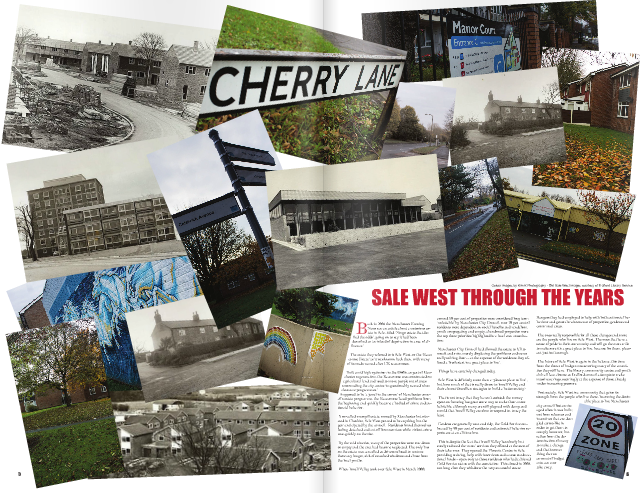
Back in 2004 the Manchester Evening News ran an article about a notorious estate in Sale, titled ‘No-go estate that defied the odds’, going on to say it had been described as ‘an island of deprivation in a sea of affluence.’

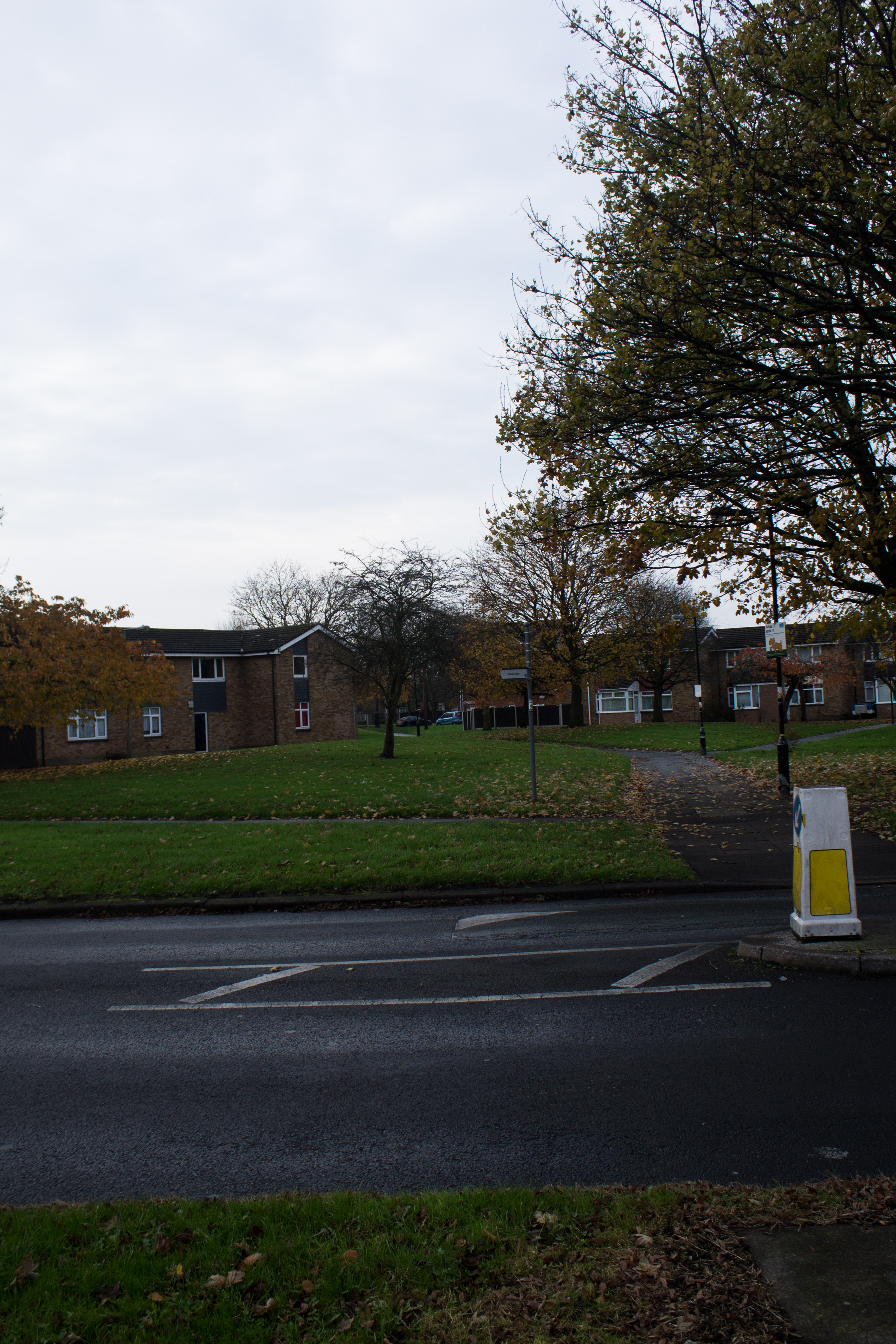
 The estate they referred to was Sale West, or the ‘Racecourse Estate’ as it was known back then, with many of the roads named after UK racecourses.

Manor Avenue

Manor Avenue


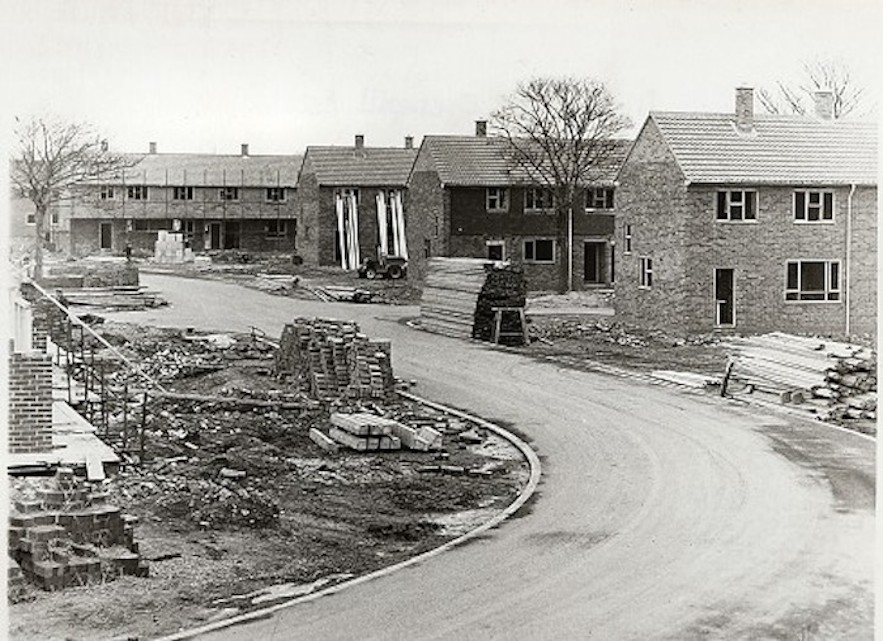
Built amid high optimism in the 1960’s, as part of Manchester regeneration, the Racecourse was constructed on agricultural land and used to move people out of areas surrounding the city centre in questionably named ‘slum clearance programmes.’

This solved a couple of problems for the council hierarchy, or ‘Manchester Mafia’ as they were called by a few in the know.

Firstly, it freed up land that could be used to build luxury homes for the high

Manor Avenue Overspill estate 1964

Manor Avenue Overspill estate 1964

earners willing to pay extortionate rent or sky-high mortgage rates, turning low income generating neighbourhoods into almost instant cash cows. Backed up with a drive in the 90’s to repopulate the ‘new and improved’ city, and with property prices at an all time high, there was some serious money made from people eager to live near the centre.

Sale West signSecondary, and perhaps even more controversially, there were some areas where residents were deemed by the council ‘the least involved with their neighbourhood’ or ‘least accessible for social professionals’. Hulme, Gorton and other parts of East Manchester were targeted, resulting in many families being offered, and accepting ‘a new home on a new estate’, relocating to Sale West.

Supposed to be ‘a jewel in the crown’ of Manchester council’s estate programme, the Racecourse faced problems from the beginning and quickly became a hotbed of crime and antisocial behaviour.

Built as a so-called overspill estate, owned by Manchester but situated in Cheshire, Sale West proved to be anything but the gem anticipated by the council. Residents found themselves feeling detached and cut off from services while violent crime was quickly on the rise.

Manor Ave

By the mid nineties, many of the properties were run down or empty and the
area had become neglected. The only bus on the estate was cancelled as drivers refused to venture there any longer, sick of smashed windows and abuse from the local youths.

The racecourse had developed a terrible reputation but hit an all time low in March 1997, when local shopkeeper, Ian Marshall confronted two robbers in the off licence he ran on West Parade and was shot dead.

Police were under intense pressure to produce a result following criticism of their lack of response to the previous problems on the estate and very quickly David Ashberry was arrested and charged with the murder, later being sentenced to 14 years in prison.

IMG_6245Measuring a lofty 6 foot 4 inches tall, David has always maintained his innocence, a claim backed up by several witnesses at the scene who, when questioned by the police at the time, stated that there were three robbers, all masked and all definitely under 6 foot. He is currently fighting to clear his name and is supported by a group called Freedom, which works with people who claim they have been wrongly convicted.

Informants on the estate at the time spoke about a dark blue car being involved and refuted claims made by police that Ashberry was ‘obsessed with guns and had a shrine to them in his flat.’ These claims turned out to be totally unsubstantiated, no firearms of any description were ever linked to him and Ashberry was eventually convicted on the only evidence they had against him, a statement written by a woman who lived near the scene of the crime.

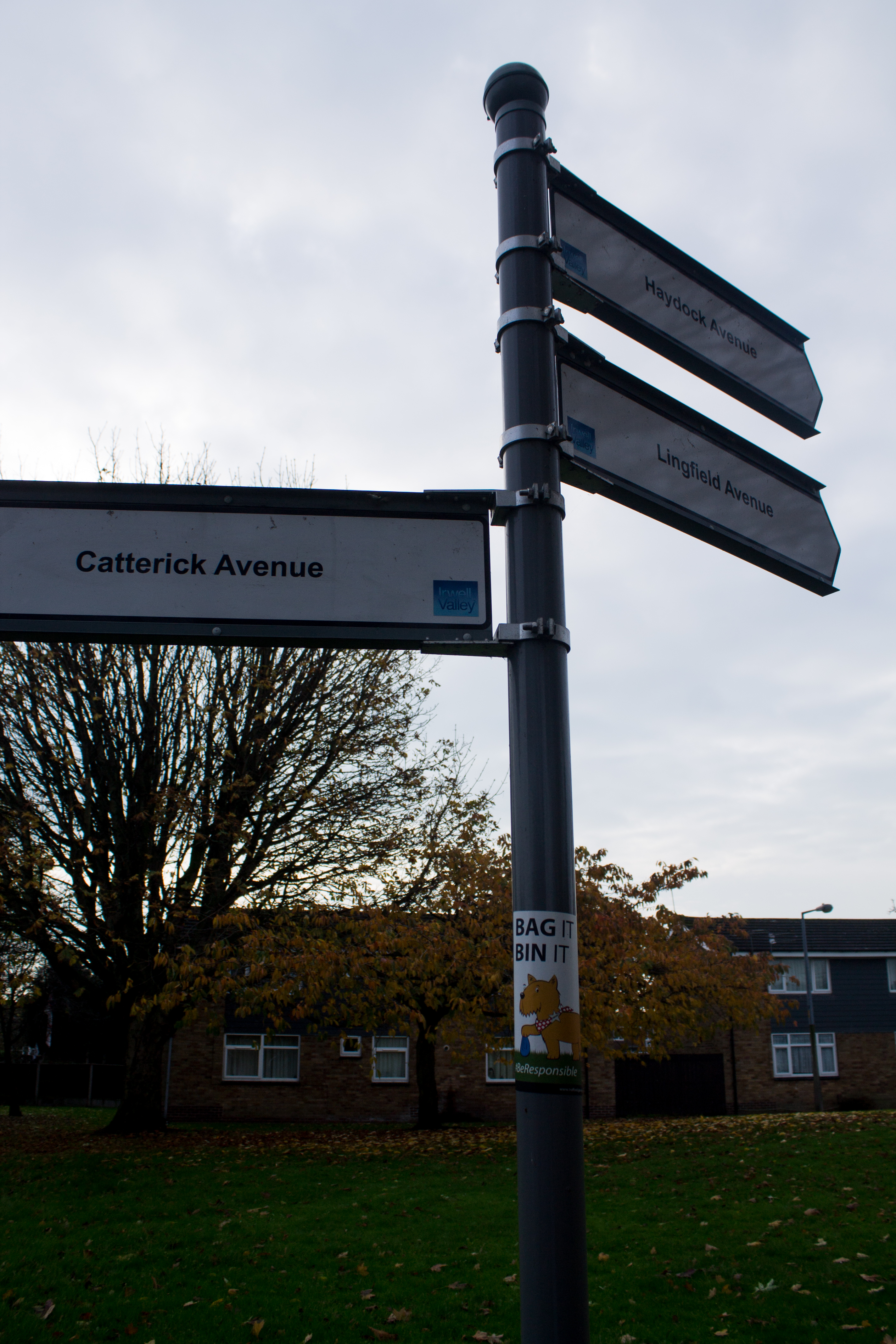
The murder of local lad Ian was the final straw for many residents and when the council were approached by Irwell Valley in March 2000, offering to buy the troublesome estate from them it was ‘warmly received’ by all involved.

Following Irwell Valley Housing Association success in securing the estate or ‘stock’ as they refer to it, the transfer of Sale West Estate, formally the Racecourse, from Manchester City Council, a long term redevelopment master plan was drafted, including improvements to existing houses, demolition of so called ‘hard to let’ properties and redevelopment of various vacant land sites dotted around the estate.

When Irwell Valley took over Sale West around 80 per cent of properties were considered long term ‘unlettable’ by Manchester City Council, over 70 per cent of residents were dependent on social benefits and vandalism, youth congregating and empty, abandoned properties were the top three priorities highlighted in a local area consultation.

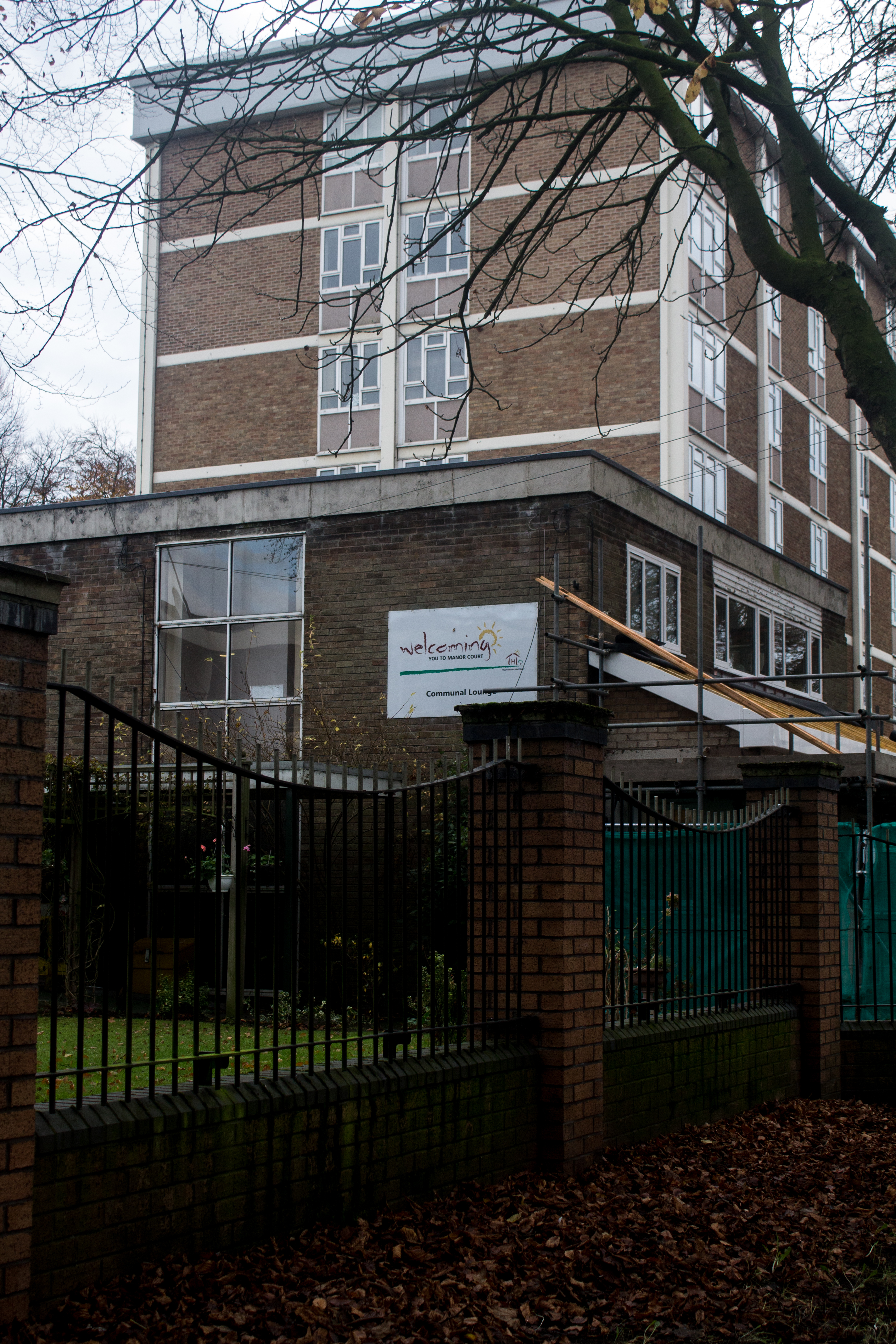
Manor Court

Manor Court

By this time buses and taxis had totally stopped venturing onto the estate, segregating residents and instilling the ‘no-go’ zone mentality further still.

Manchester City Council had allowed the estate to fall to wreck and ruin, merely displacing the problems and never really solving them – at the expense of the residents they offered a ‘fresh start in a great place to live’.

Irwell Valley pioneered a scheme called Gold Service back in 1998 and it had proved to be a great success when implicated in other ‘troublesome’ estates they managed so it was no surprise when they launched it on Sale West soon after acquisition.

The Gold Scheme is a great example of the housing associations entrepreneurialism – developed to ‘aid regeneration of deprived areas into more pleasant places to live’, it focuses on residents rather than housing stock, defining them as local customers and putting their needs first on the regeneration agenda. So far so good.

The concept is that ‘good’ residents are rewarded with additional services and amenities. By providing these ‘perks’ the association tries to increase the involvement of residents and, in doing so, their attachment to the housing association and neighbourhood.

This explicit distinction between good and bad tenants has forced local governments to rethink some of their equality-based housing policies.

The assumption behind the scheme is learning by moral example: seeing the benefits neighbours receive triggers residents to comply with the behavioural rules set by the housing association in order to become eligible for the same rewards. This will not only improve the behaviour of residents but also the reputation of the area to outsiders, this in turn, they hope, will attract new and especially affluent residents to the area. Best garden competition anyone?

IMG_6139f

It’s no coincidence that the new, private houses were built around Sale West around eight years after Irwell Valley took over either. The association believes that ‘middle-class groups will only feel at home in deprived neighbourhoods when the behaviour of antisocial residents has changed’.

First they addressed these issues using the Gold Service system and then, when they felt the time was right the new houses went up creating a new revenue source offering ‘housing specifically designed and priced for middle class families’.

Another strategy employed by Irwell Valley to create ‘a pleasant place to live’ is attracting the right kind of people to buy the properties, people who can serve a as good role models to the other residents, interesting fact – employees of the city council and social services were given priority when the new houses were released for sale.

Sale West is definitely more than a ‘pleasant place to live’ today, but how much of that is really down to Irwell Valley and their almost Orwellian strategies to build a better society

watching us watching you

watching us watching you?

That is not to say that they haven’t assisted; the money spent on housing has gone some way to make them more habitable, although many are still plagued with damp and mould that Irwell Valley are slow to respond to, to say the least.

Gardens are generally neat and tidy, the Gold Service embraced by 90 per cent of residents and antisocial behaviour reports are at an all time low.

This is despite the fact that Irwell Valley has slowly but surely reduced the ‘extra’ services they offered at the start of their take over. They opened the Phoenix Centre in Sale, providing training, help with interviews and access to educational funds – open only to those residents who had achieved Gold BUS STOPService status with the association. This closed in 2005, not long after they withdrew the very successful estate Rangers they had employed to help with both anti social behaviour and general maintenance of properties, gardens and communal areas.

The ones really responsible for all these changes and more are the people who live on Sale West. The ones that have a sense of pride in their community and will go the extra mile to make sure it’s a great place to live, because for them, pleasant just isn’t enough.

The future of Sale West is again in the balance, this time from the threat of budget cuts severing many of the amenities they still have. The library,

Coppice library

Coppice library

community centre and youth club all face closure as Trafford council attempts to make massive savings, seemingly at the expense of those already under increasing pressure.

Fortunately, Sale West is a
community that gains its strength from the people who live there, becoming the desirable place to live Manchester city council first envisaged when it was built; not from schemes and incentives that are dangled carrot-like in order to get them to comply however, but rather from the determination of many to make a change and that’s something that no amount of budget cuts can ever take away.

IMG_6192


Photographs taken by Kim K Photography. All are subject to copyright and may not be reproduced or used without permission and correct attribution 🙂


The edited version of this article first appeared in Sale West Voice Magazine –


Kent Wayne

Epic fantasy & military sci-fi author.

tonysbologna : Honest. Satirical. Observations

Funny Blogs With A Hint Of Personal Development

Wild Like the Flowers

Rhymes and Reasons for Every Season

Ummi Homeschools Me

Our journey through homeschooling...for the sake of our Beloved!

ultimatemindsettoday

A great WordPress.com site

Pencil Hub

For the Love of Stationery

unbolt me

the literary asylum

Thoughts, Tales, and Whatnot

the world as I see it through rose-tinted glasses

bookowly

bookowly

Captain’s Log

Life On A Different Plane

ashutosh buch

Random Stuff

Mo Ansar.com

The official website of Mohammed Ansar

Da Masked Avenger

Waiting to strike...

A Buick in the Land of Lexus

fresh hell trumps stale heaven

The Buttry Diary

Steve Buttry, Dearly Departed Husband, Father and Grandfather. Former Director of Student Media, LSU's Manship School of Mass Communication

twinswins

Life is two-riffic with twins!