
As winter takes hold, how many Manchester children will spend Christmas in temporary accommodation? At the end of March, there were already nearly 5,000. Rents have risen since then, yet the government is still asking families to find a home on housing allowance rates set in April 2024
The landlord wanted to sell. The tenant needed somewhere she could afford to live with her two children. By the time the case reached court, she still hadn’t found it.
The court ordered her to pay £404 in landlord’s costs.
She had asked for help in early April 2025, weeks before her eviction notice expired.
Manchester City Council accepted that she was threatened with homelessness and drew up a plan. She explained that, for health reasons, she needed a bungalow or a ground-floor flat.
The council tried to speak to the landlord. When it reached him, he said she couldn’t stay.
By late June, she was being told the council’s private rented sector team wouldn’t review her case until there was a possession order. In the meantime, she was advised to keep looking.
The landlord eventually complained to the council on her behalf.
That detail is easy to miss in the Ombudsman’s decision. He still wanted his property back. He also thought she should have had more help finding somewhere to go.
In July 2026, the Local Government and Social Care Ombudsman found that Manchester had responded appropriately at first, then failed to assess whether it was reasonable for the family to stay after the notice expired.
The council delayed accepting its next duty, failed to provide accommodation when it should have and did not adequately respond when the tenant found a possible rental and asked for financial help.
The council agreed to reimburse the £404, pay £450 for the distress caused and also remind staff of their duties.
By the time that decision came out, England had abolished Section 21 for private assured tenancies, subject to transitional rules.
The notice that started this family’s case belonged to the old system. The question the case raises is still with us.
When somebody can see homelessness coming, how much of the time they have left can they actually use? Ombudsman decision · Renters’ Rights Act commencement regulations
What four months can buy you
Since 1 May 2026, private landlords generally have to give a legal reason to regain possession of an assured tenancy. Selling is one of those reasons.
A landlord relying on the sale ground has to genuinely intend to sell and give at least four months’ notice before applying to court. If the case goes to court, the landlord has to prove that the ground applies.
Four months gives a household time to work out what it can pay, arrange viewings and ask for help with the move.
It gives a council time to find out whether a landlord will agree to an extension, or whether some financial help could make the difference between a tenant getting a new place and losing it.
The government’s homelessness guidance says councils should contact landlords early in relevant cases. It also encourages councils to offer help where they can even when the risk is more than 56 days away.

Those 56 days matter because an eligible person who is threatened with homelessness can be owed a prevention duty.
In general, that means they are likely to become homeless within 56 days.
A qualifying, valid Section 8 notice for the only home available to them can also trigger the duty once the date specified in it is within 56 days. The council must take reasonable steps to prevent homelessness.
If the person is already homeless, a different duty to help them find accommodation can apply. The duty to provide interim accommodation has its own test.
The Manchester mother had a housing plan. She had been in touch with the council. She had done what people are encouraged to do and asked for help before it became an emergency. The Ombudsman’s finding was about what happened after that first response, when the original plan had stopped being enough.
In a separate Manchester case, the council accepted a homelessness duty but failed to provide interim accommodation when a mother and her children were evicted in September 2025.
The family had to fund two nights themselves.
The council told the Ombudsman it believed the mother had enough money to manage those nights. The mother said the money had been intended for groceries.
The Ombudsman found fault, and the council agreed to apologise, make payments and train staff.

Both cases predate the new tenancy rules.
They give Manchester a specific question to answer now.
After agreeing to change what officers do, how does the council check that help reaches people while there is still time to use it?
Manchester’s public guidance directs people who think they may become homeless within 56 days to its Housing Solutions service. What happens after that referral is the part a tenant has to live through.
The rent at the cheaper end
In the first three months of 2026, Manchester City Council recorded 252 households owed a homelessness prevention duty.
In 132 cases, the recorded reason was the end of a private tenancy.
That included 115 assured shorthold tenancies and 17 other private tenancies. Among the 115, the council recorded that the landlord wanted to sell in 36 cases and re-let in 23.
In the same quarter, Manchester recorded 218 prevention duties ending.
In 131 of those cases, the household had secured accommodation for at least six months.
Ninety-four stayed where they were. Thirty-seven moved.
Those figures cover all reasons for approaching the council and count cases that closed in the quarter, so they represent a different group from the 252 newly assessed.
Even so, there’s a detail worth pausing over. In most of the cases where people secured somewhere to live, they were able to stay in the home they already had.
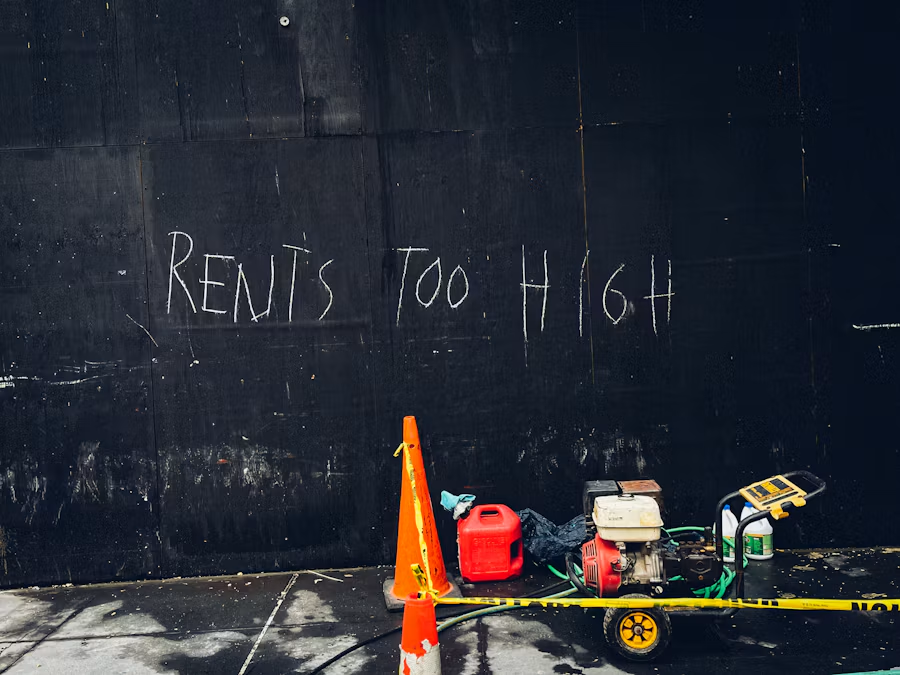
But what about the household that has to move?
By October 2026, the Office for National Statistics put the average rent for a three-bedroom home in the City of Manchester at £1,448 a month.
The three-bedroom Local Housing Allowance rate for the Central Greater Manchester rental market area, which covers most Manchester city postcodes, was £950 a month for Universal Credit. The two figures cover different areas, and a citywide average tells a family very little about what it might find at the cheaper end.
The government publishes another set of figures that gets closer to the question.
In Central Greater Manchester, the Valuation Office Agency put the three-bedroom rent at the 30th percentile of its sample at £273.86 a week. Roughly three in ten rents in the sample were at or below that benchmark.
The three-bedroom weekly Local Housing Allowance was £218.63. That’s £55.23 a week between the allowance and a benchmark already towards the cheaper end of the local market.
The agency collected those rents over the year to September 2025. It published the newer figure, but the rules for setting the 2026–27 allowance excluded it.
The government knew what had happened to rents. Its own agency had done the sums.
It kept the allowance at April 2024 levels anyway.
There’s a peculiar logic in telling councils to prevent homelessness while freezing the help that lets people pay their rent.
A family looking for a three-bedroom home might have to search further out, make do with less space or find the extra money every week.
The government gets to call its part a freeze.
The family still has to pay the rent.

Manchester’s discretionary Housing Payments scheme can help some households with a rent shortfall, and the council’s policy allows it to consider deposits where there is a clear link to preventing or resolving homelessness.
That could make a real difference when a family has found somewhere suitable.
A deposit gets you through the door. The rent has to be found again the following month.
What happens to the home?
Landlords have their own account of what is happening.
In a May–June survey, the National Residential Landlords Association said 26 per cent of respondents had sold or were selling at least some properties because of the Renters’ Rights Act.
The association also reported concerns about rising costs.
At a Manchester scrutiny meeting in September, a council officer said some smaller landlords had sold to larger portfolio landlords and that the city still had a significant supply of private rentals. The survey tells us what participating landlords reported.
The minutes record the officer’s assessment.
Neither provides a count of how many affordable homes Manchester tenants lost.

A sale can leave a property in the rental market. What matters to the tenant is whether they get to stay in it, and what they can afford nearby if they have to go. The next government homelessness figures, due on 26 November, cover April to June 2026.
That’s one month under the old rules and two under the new ones. It will take longer to see whether the new protections give tenants enough time to find somewhere they can stay.
At the end of March 2026, Manchester City Council had 2,788 households in temporary accommodation. There were 4,929 children among them.
That’s a count from one day, in one city, in a wealthy country.
How have we got so used to this that we can put nearly five thousand children in a spreadsheet under temporary and move on?
We know what happened to the £404. The council agreed to pay it back. In its last recorded call to the mother, it asked whether the bailiffs had been and where things stood.
She told them the call had come too late and ended it.
She’d first asked for help in April. By December, the council was asking where things stood.
The public record still can’t tell us where she and her children ended up.