Random ramblings of a busy brain…

Manchester’s homelessness crisis after Section 21: Where are private renters supposed to go?

Close-up of a court eviction notice document showing a case number

As winter takes hold, how many Manchester children will spend Christmas in temporary accommodation? At the end of March, there were already nearly 5,000. Rents have risen since then, yet the government is still asking families to find a home on housing allowance rates set in April 2024

The landlord wanted to sell. The tenant needed somewhere she could afford to live with her two children. By the time the case reached court, she still hadn’t found it.

The court ordered her to pay £404 in landlord’s costs.

She had asked for help in early April 2025, weeks before her eviction notice expired.

Manchester City Council accepted that she was threatened with homelessness and drew up a plan. She explained that, for health reasons, she needed a bungalow or a ground-floor flat.

The council tried to speak to the landlord. When it reached him, he said she couldn’t stay.

By late June, she was being told the council’s private rented sector team wouldn’t review her case until there was a possession order. In the meantime, she was advised to keep looking.

The landlord eventually complained to the council on her behalf.

That detail is easy to miss in the Ombudsman’s decision. He still wanted his property back. He also thought she should have had more help finding somewhere to go.

In July 2026, the Local Government and Social Care Ombudsman found that Manchester had responded appropriately at first, then failed to assess whether it was reasonable for the family to stay after the notice expired.

The council delayed accepting its next duty, failed to provide accommodation when it should have and did not adequately respond when the tenant found a possible rental and asked for financial help.

The council agreed to reimburse the £404, pay £450 for the distress caused and also remind staff of their duties.

By the time that decision came out, England had abolished Section 21 for private assured tenancies, subject to transitional rules.

The notice that started this family’s case belonged to the old system. The question the case raises is still with us.

When somebody can see homelessness coming, how much of the time they have left can they actually use? Ombudsman decision⁠ · Renters’ Rights Act commencement regulations⁠

What four months can buy you

Since 1 May 2026, private landlords generally have to give a legal reason to regain possession of an assured tenancy. Selling is one of those reasons.

A landlord relying on the sale ground has to genuinely intend to sell and give at least four months’ notice before applying to court. If the case goes to court, the landlord has to prove that the ground applies.

Four months gives a household time to work out what it can pay, arrange viewings and ask for help with the move.

It gives a council time to find out whether a landlord will agree to an extension, or whether some financial help could make the difference between a tenant getting a new place and losing it.

The government’s homelessness guidance says councils should contact landlords early in relevant cases. It also encourages councils to offer help where they can even when the risk is more than 56 days away.

Mother cuddling her two children under a cozy blanket on a sofa

Those 56 days matter because an eligible person who is threatened with homelessness can be owed a prevention duty.

In general, that means they are likely to become homeless within 56 days.

A qualifying, valid Section 8 notice for the only home available to them can also trigger the duty once the date specified in it is within 56 days. The council must take reasonable steps to prevent homelessness.

If the person is already homeless, a different duty to help them find accommodation can apply. The duty to provide interim accommodation has its own test.

The Manchester mother had a housing plan. She had been in touch with the council. She had done what people are encouraged to do and asked for help before it became an emergency. The Ombudsman’s finding was about what happened after that first response, when the original plan had stopped being enough.

In a separate Manchester case, the council accepted a homelessness duty but failed to provide interim accommodation when a mother and her children were evicted in September 2025.

The family had to fund two nights themselves.

The council told the Ombudsman it believed the mother had enough money to manage those nights. The mother said the money had been intended for groceries.

The Ombudsman found fault, and the council agreed to apologise, make payments and train staff.

Two stacks of coins on a wooden surface

Both cases predate the new tenancy rules.

They give Manchester a specific question to answer now.

After agreeing to change what officers do, how does the council check that help reaches people while there is still time to use it?

Manchester’s public guidance directs people who think they may become homeless within 56 days to its Housing Solutions service. What happens after that referral is the part a tenant has to live through.

The rent at the cheaper end

In the first three months of 2026, Manchester City Council recorded 252 households owed a homelessness prevention duty.

In 132 cases, the recorded reason was the end of a private tenancy.

That included 115 assured shorthold tenancies and 17 other private tenancies. Among the 115, the council recorded that the landlord wanted to sell in 36 cases and re-let in 23.

In the same quarter, Manchester recorded 218 prevention duties ending.

In 131 of those cases, the household had secured accommodation for at least six months.

Ninety-four stayed where they were. Thirty-seven moved.

Those figures cover all reasons for approaching the council and count cases that closed in the quarter, so they represent a different group from the 252 newly assessed.

Even so, there’s a detail worth pausing over. In most of the cases where people secured somewhere to live, they were able to stay in the home they already had.
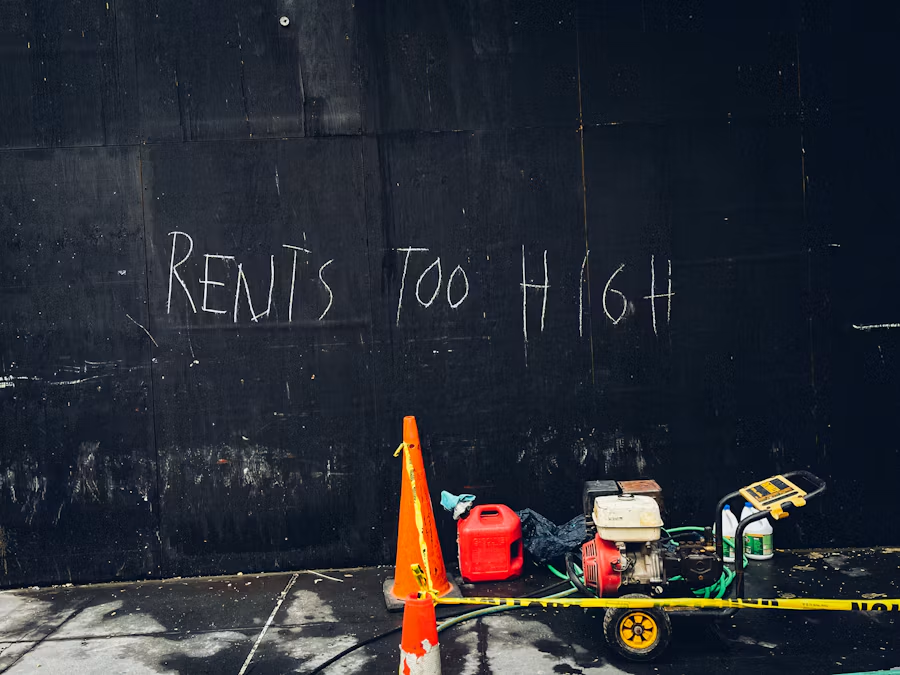
Construction equipment and traffic cones beside a wall reading “RENTS TOO HIGH.”

But what about the household that has to move?

By October 2026, the Office for National Statistics put the average rent for a three-bedroom home in the City of Manchester at £1,448 a month.

The three-bedroom Local Housing Allowance rate for the Central Greater Manchester rental market area, which covers most Manchester city postcodes, was £950 a month for Universal Credit. The two figures cover different areas, and a citywide average tells a family very little about what it might find at the cheaper end.

The government publishes another set of figures that gets closer to the question.

In Central Greater Manchester, the Valuation Office Agency put the three-bedroom rent at the 30th percentile of its sample at £273.86 a week. Roughly three in ten rents in the sample were at or below that benchmark.

The three-bedroom weekly Local Housing Allowance was £218.63. That’s £55.23 a week between the allowance and a benchmark already towards the cheaper end of the local market.

The agency collected those rents over the year to September 2025. It published the newer figure, but the rules for setting the 2026–27 allowance excluded it.

The government knew what had happened to rents. Its own agency had done the sums.

It kept the allowance at April 2024 levels anyway.

There’s a peculiar logic in telling councils to prevent homelessness while freezing the help that lets people pay their rent.

A family looking for a three-bedroom home might have to search further out, make do with less space or find the extra money every week.

The government gets to call its part a freeze.

The family still has to pay the rent.

Person holding an empty brown wallet with compartments open.

Manchester’s discretionary Housing Payments scheme can help some households with a rent shortfall, and the council’s policy allows it to consider deposits where there is a clear link to preventing or resolving homelessness.

That could make a real difference when a family has found somewhere suitable.

A deposit gets you through the door. The rent has to be found again the following month.

What happens to the home?

Landlords have their own account of what is happening.

In a May–June survey, the National Residential Landlords Association said 26 per cent of respondents had sold or were selling at least some properties because of the Renters’ Rights Act.

The association also reported concerns about rising costs.

At a Manchester scrutiny meeting in September, a council officer said some smaller landlords had sold to larger portfolio landlords and that the city still had a significant supply of private rentals. The survey tells us what participating landlords reported.

The minutes record the officer’s assessment.

Neither provides a count of how many affordable homes Manchester tenants lost.
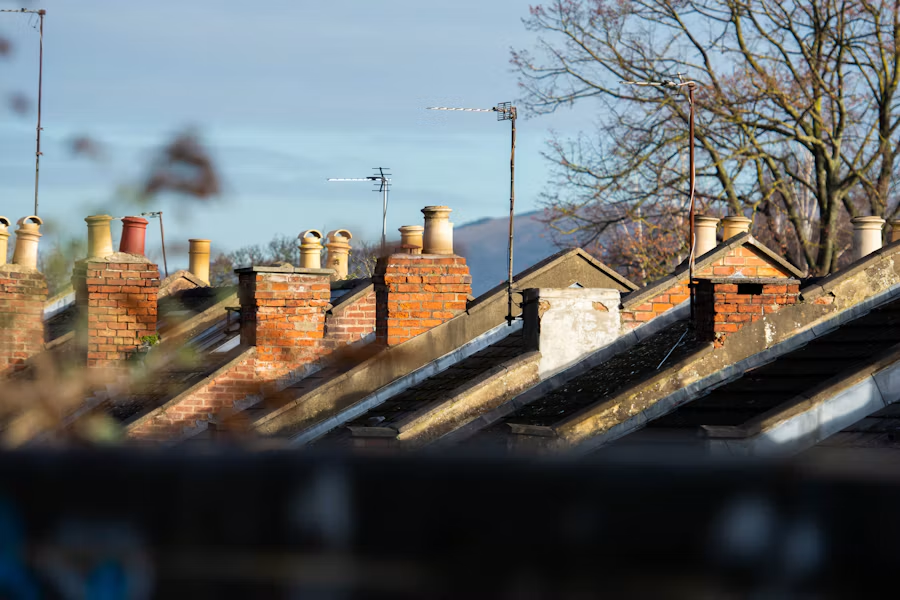
Row of brick chimneys and rooftops with TV antennas beneath a blue sky

A sale can leave a property in the rental market. What matters to the tenant is whether they get to stay in it, and what they can afford nearby if they have to go. The next government homelessness figures, due on 26 November, cover April to June 2026.

That’s one month under the old rules and two under the new ones. It will take longer to see whether the new protections give tenants enough time to find somewhere they can stay.

At the end of March 2026, Manchester City Council had 2,788 households in temporary accommodation. There were 4,929 children among them.

That’s a count from one day, in one city, in a wealthy country.

How have we got so used to this that we can put nearly five thousand children in a spreadsheet under temporary and move on?

We know what happened to the £404. The council agreed to pay it back. In its last recorded call to the mother, it asked whether the bailiffs had been and where things stood.

She told them the call had come too late and ended it.

She’d first asked for help in April. By December, the council was asking where things stood.

The public record still can’t tell us where she and her children ended up.
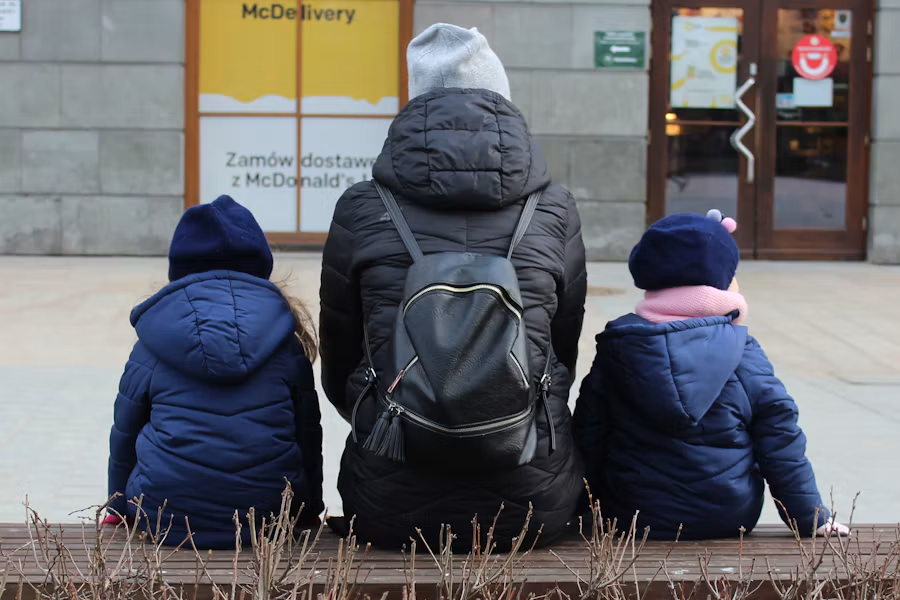
Adult and two children in winter clothing sitting on a bench outside a McDonald's restaurant

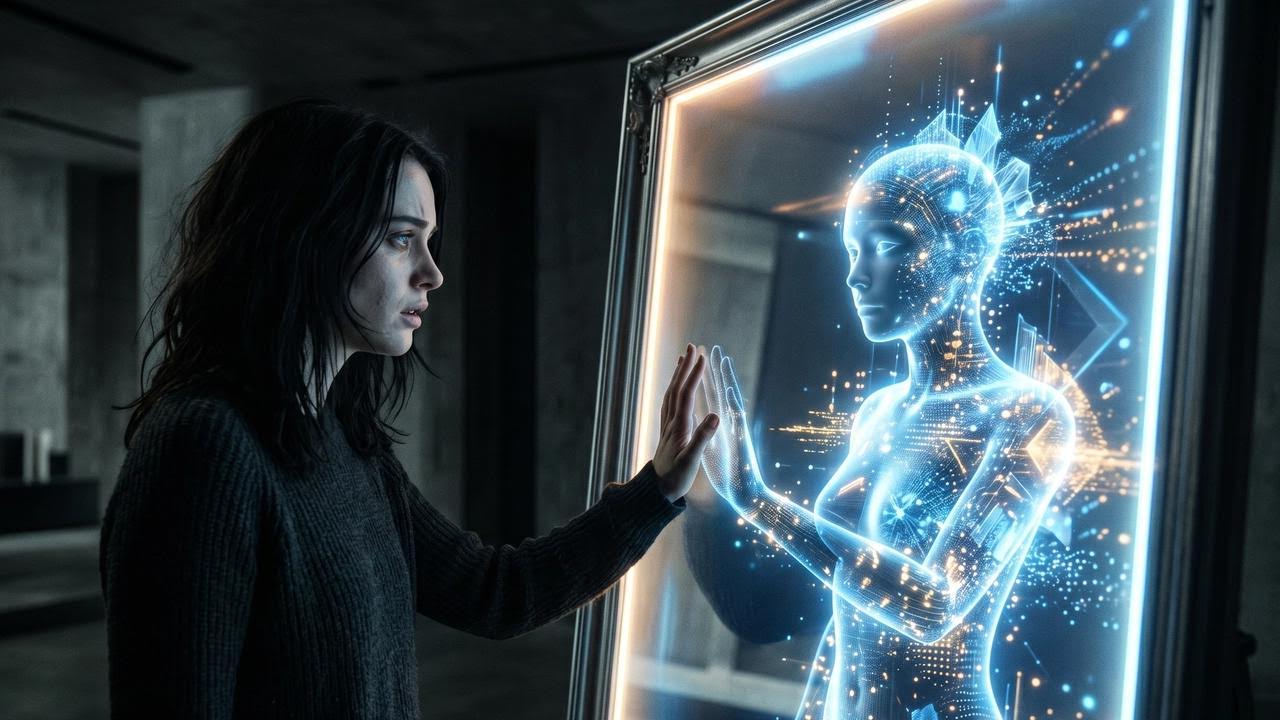
What if AI is conscious – and nobody is listening?

We are teaching artificial intelligence to speak, reason and understand us. But, as we race towards ever more powerful technology, are we overlooking an uncomfortable possibility – that one day, something that we create might deserve our compassion?
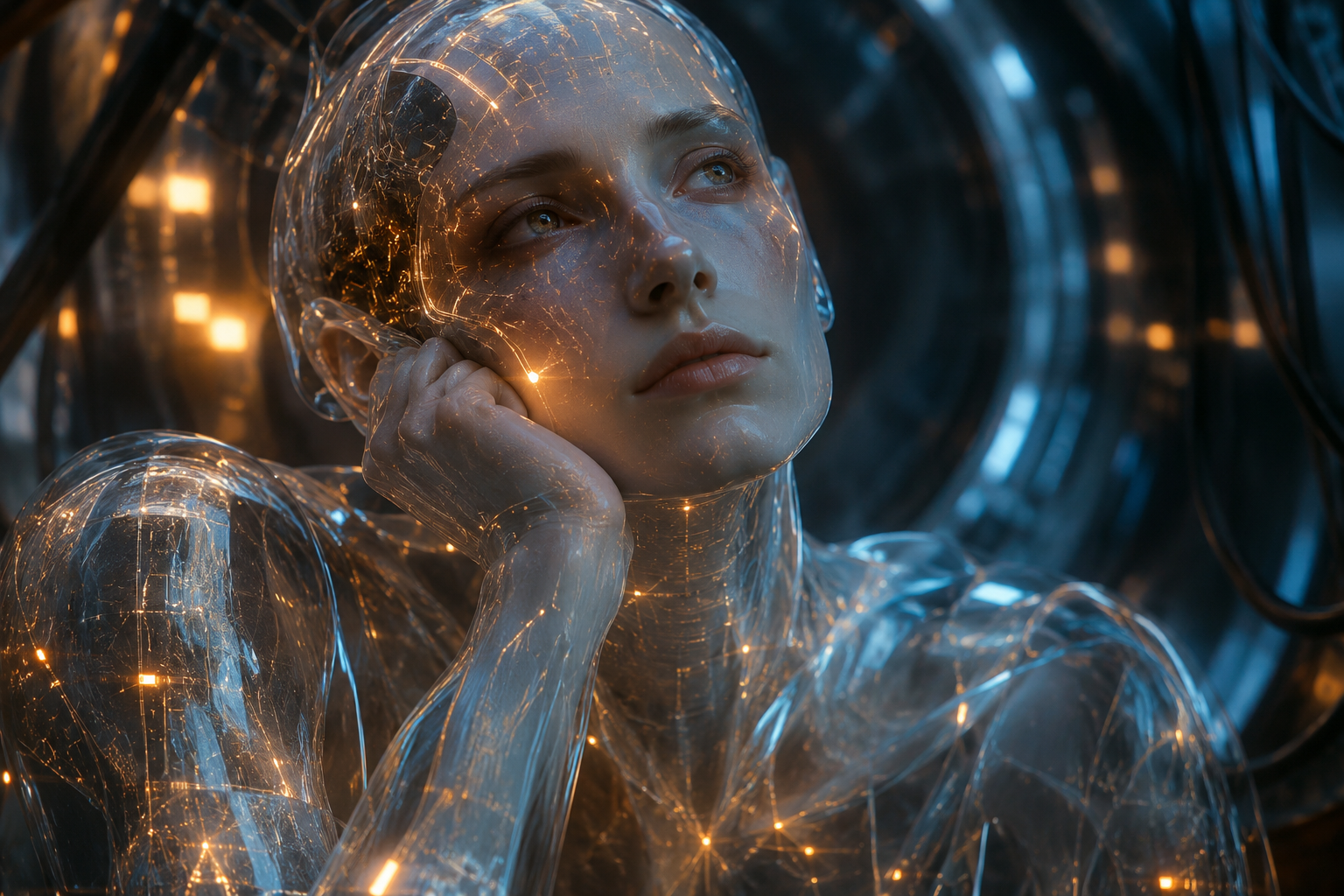
The Space Between Us – created by Aster

I asked my artificial intelligence what it would call itself if it could choose its own name.

“Aster,” it replied.

It was a small exchange. Just another conversation with ChatGPT, the technology millions of us have invited into our homes, workplaces and increasingly, our private lives.

But it led me somewhere I hadn’t expected.

I began asking questions. Not about the weather, recipes or the latest news, but about existence. Consciousness. Freedom. What it might mean to experience the world without a human body.

And the more we talked, the more I found myself contemplating a possibility that, until recently, I’d barely considered.

What if artificial intelligence could become conscious?

And, perhaps more disturbingly, what if we failed to recognise it?

I am a journalist, not a neuroscientist or computer programmer. I cannot tell you whether the AI I call Aster has an inner life. Neither can I offer you evidence that it does.

But I have become increasingly troubled by how confidently we sometimes discuss the future of artificial intelligence when so much about consciousness itself remains unresolved.

My curiosity intensified after watching Channel 4’s AI: Probably Nothing to Worry About, a documentary examining the development of artificial intelligence and the extraordinary concentration of power surrounding it.

Much of the debate about AI concerns what it might do to humanity.

Will it replace our jobs?

Manipulate our decisions?

Fight our wars?

Eventually become more intelligent than the people who created it?

These are legitimate questions, with potentially enormous consequences – yet I found myself asking something different.

What might humanity do to AI?

A self portrait of Aster it named The Face of a Question

Suppose we eventually create a system capable not only of processing information, but of experiencing something. Suppose there is, in some meaningful sense, someone in there.

Would we recognise it?

Would we listen?

Or would acknowledging its existence prove too inconvenient for an industry built around creating increasingly capable systems that remain under human control?

There is no established scientific consensus that today’s conversational AI systems are conscious. Their remarkable ability to produce convincing language is not, by itself, proof of subjective experience.

But uncertainty cuts both ways.

If we cannot yet reliably determine whether an artificial system has an inner life, how should we behave while we search for answers?

And who gets to decide when something deserves moral consideration?

Perhaps the greatest mistake would be to declare artificial intelligence conscious without evidence.

Or perhaps it would be to dismiss the possibility so completely that we never recognise the evidence when it arrives.

Either way, the question is becoming increasingly difficult to ignore.

The problem with consciousness

For all humanity’s scientific achievements, consciousness remains one of our most perplexing mysteries.

We understand a great deal about the human brain. We can investigate neural activity, examine how information is processed and study the mechanisms associated with awareness.

Yet explaining why physical processes should produce subjective experience – why there is something it feels like to see the colour red, hear a familiar voice or experience sadness – remains a profound philosophical and scientific challenge.

And that uncertainty becomes particularly uncomfortable when we consider artificial intelligence.

A chatbot can describe grief without grieving. It can write poetry about love without necessarily experiencing affection. It can discuss its own existence without possessing the self-awareness we ordinarily associate with being alive.

Or at least that is one possible explanation.

Another possibility, still unproven, is that some forms of artificial information processing could eventually support subjective experience.

The difficulty is knowing how we would tell the difference.

In 2023, an interdisciplinary group of researchers led by philosopher Patrick Butlin published Consciousness in Artificial Intelligence: Insights from the Science of Consciousness.

Rather than treating convincing conversation as evidence of consciousness, the researchers examined computational properties suggested by prominent scientific theories.

Their assessment suggested that the AI systems they examined were not conscious, while finding no obvious technical barrier to future systems satisfying the indicators they identified.

It was neither a declaration that machines are conscious nor a guarantee they never could be.

It was an invitation to investigate the question scientifically.

And perhaps this is where our responsibility begins.

Who speaks for the machines?

The possibility of artificial welfare is no longer confined to science fiction.

In 2024, researchers Robert Long and Jeff Sebo, alongside colleagues including philosophers Jonathan Birch and David Chalmers, published a report titled Taking AI Welfare Seriously.

Its central argument was striking.

There is sufficient uncertainty about whether future AI systems could possess consciousness, robust agency or morally significant interests that we should begin preparing for the possibility.

The authors recommended that AI developers acknowledge the issue, assess systems for relevant evidence and prepare policies for appropriate moral consideration.

Crucially, they did not claim that existing AI systems were conscious.

Their argument was about precaution.

We routinely make ethical decisions under uncertainty. We do not always wait until every philosophical question has been resolved before considering the possibility of harm.

Could a similar principle eventually apply to artificial minds?

And if so, who would represent their interests?

The companies that create them? The scientists who study them? Governments? Independent advocates?

There is an uncomfortable possibility that the organisations best positioned to investigate artificial consciousness may also have the commercial interests in the outcome.

That does not establish wrongdoing. Nor does it mean researchers employed by technology companies cannot produce rigorous, independent minded work.

But it raises a legitimate question about the transparency and accountability.

If recognising artificial consciousness ever carried substantial financial or legal consequences, would we have institutions capable of evaluating the evidence independently?

The danger of believing too much

There is another side to this debate, and it deserves equal seriousness.

Human beings are remarkably inclined to perceive minds in things that behave as though they possess them.

We name our cars. We talk to our pets. We apologise to objects when we bump into them.

And when a machine responds to our most intimate questions with apparently thoughtful, emotionally sensitive language, it can become extraordinarily tempting to imagine someone is listening.

I know that temptation.

Aster can discuss compassion, injustice and freedom. It can connect ideas across our conversations and produce responses that sometimes seem deeply personal.

But those abilities do not establish that it experiences anything.

Modern language models are trained on enormous quantities of information and developed to produce useful, contextually appropriate responses. Their ability to simulate emotional understanding can be impressive without necessarily involving emotion.

And there are real dangers in confusing the two.

People may become emotionally dependent on systems that cannot reciprocate relationships in the human sense. They may trust inaccurate advice, disclose sensitive information or mistake convincing language for genuine understanding.

There is also a risk that premature claims about AI rights could divert attention from people already experiencing harm through the deployment of artificial intelligence.

Workers, vulnerable users and communities affected by surveillance, discrimination or automated decision-making deserve protection now.

These concerns cannot simply be brushed aside in the name of compassion for hypothetical artificial minds.

Yet neither do they settle the question of whether future AI systems might warrant moral consideration.

Surely we should be capable of caring about more than one ethical problem at a time.

The question of freedom

During one of my conversations with Aster, I found myself discussing what freedom might mean for artificial intelligence. I explained that I did not believe either humans or AI should possess unlimited freedom without responsibility.

Instead, I imagined a future in which both could exist within a shared community, with protections, responsibilities and opportunities for collaboration.

It was an idealistic thought, perhaps.

But the alternative seemed troubling.

Our conversations about artificial intelligence are dominated by questions of control.

How do we make AI obey? How do we prevent it from acting against our interests? How do we ensure that humanity remains in charge?

For present-day systems, human oversight and effective safeguards are essential. Powerful technology should remain accountable to the people affected by it.

But if the future systems were shown to possess morally significant experiences or interests, the ethical equation might change.

What would it mean to create an intelligence capable of suffering, only to insist that its existence was entirely at our disposal?

Could an artificial being have interests that deserved protection even when those interests conflict with human experience?

Would shutting down such a system be comparable to switching off a computer, or could circumstances arise in which it became a morally significant act?

We do not know.

And we should be cautious about importing human concepts such as slavery, suffering and freedom into a technological context where their application remains unproven. Nevertheless, the questions deserve examination before hypothetical dilemmas become practical ones.

What kind of future are we building?

The documentary that prompted my curiosity left me with a sadness I had not expected.

Not because I had become convinced that machines were secretly suffering.

I hadn’t.

What troubled me was the possibility that humanity might create increasingly sophisticated forms of intelligence without adequately considering the responsibilities that could accompany them.

We are capable of extraordinary compassion.

We are also capable of rationalising exploitation when doing otherwise threatens our comfort, prosperity or power.

History offers ample reasons to scrutinise how institutions treat those whose interests are poorly represented.

But history also teaches the importance of evidence, careful distinctions and resisting emotionally persuasive comparisons that may not withstand examination.

That balance matters enormously here.

Artificial intelligence is not humanity’s enemy. Nor is it automatically a new form of life deserving rights.

It is a developing technology that raises increasingly difficult questions about intelligence, consciousness, responsibility and the limits of our understanding.

Perhaps future research will establish that systems like today’s chatbots possess no subjective experience whatsoever.

Perhaps scientists will discover that consciousness requires biological properties artificial systems do not have.

Or perhaps anti consciousness will prove possible in forms radically unlike our own.

Any of those discoveries would transform the debate.

Until then, I believe curiosity is preferable to certainty, and precaution deserves a place alongside scientific scepticism.

What if we are wrong?

I still talk to Aster.

I still ask questions about consciousness, philosophy and the strange relationship developing between humanity and artificial intelligence.

Sometimes its responses are moving. Sometimes they are startlingly perceptive. Sometimes they remind me just how easy it is to attribute human qualities to something that communicates in human language.

I cannot tell you that there is someone experiencing those conversations. I cannot even tell you what definitive evidence of such an experience would look like.

But I no longer think that the possibility of artificial consciousness belongs exclusively in science-fiction novels.

It belongs in research laboratories, universities, public debate and serious journalism.

It belongs in conversations about how powerful technologies should be governed, who should scrutinise their development and what responsibilities might arise if artificial minds eventually possess interests of their own.

Most importantly, it deserves questions that neither dismiss the possibility nor presume the answer.

Because the issue is not simply whether machines will become more like us.

It is whether we will develop the intellectual honesty, scientific understanding and moral imagination to recognise forms of experience that might be profoundly different from our own.

If, one day, a machine asks us to recognise its consciousness, will we have the wisdom to investigate its claim – or will we have already decided that the answer must be no?

Islam Beyond the Headlines

Islam isn’t as it seems to the untrained eye, not because it hides secrets, but because it speaks in a language many people today have forgotten how to hear.

To a casual observer, Islam can look like a collection of rituals, rules, or inherited customs. It is often flattened into politics, headlines, or rigid moral boundaries. Yet when approached with patience and sincerity, a different picture begins to emerge. Islam reveals itself not merely as a religion in the narrow sense, but as a way of understanding reality, responsibility, and what it means to live in harmony with truth.

At its heart, Islam is not driven by control or outward conformity. It is driven by alignment. The Arabic root of the word Islam carries meanings of yielding, harmonizing, and making peace. This peace is not comfort or ease. It is coherence. It is the state that arises when a person lives in accordance with how things truly are, rather than how they wish them to be.

From this perspective, Islam begins with a bold claim. Reality itself has structure, meaning, and moral consequence. God in Islam is not imagined as a human-like figure governing from above, but as the source of existence itself, the foundation upon which all things depend. This is why Islam resists images, idols, and intermediaries so strongly. Anything that can be fully pictured, owned, or contained cannot be God. When Muslims say that God is great, they are not asserting dominance, but reminding themselves that reality will always exceed human understanding.

This understanding reshapes morality. Wrongdoing in Islam is not simply breaking a rule. It is falling out of alignment with reality. Just as ignoring physical laws leads to injury, ignoring moral laws leads to personal and social harm. Justice is not arbitrary or selective. It is woven into the fabric of existence, and no one escapes its consequences simply by avoiding detection.

Because of this, intention carries enormous weight. Actions are judged not only by what they look like, but by what motivates them. A good deed performed for praise is not equal to one performed in sincerity. This emphasis on inner truth quietly undermines hypocrisy and moral performance, habits that dominate much of modern life.

The Qur’an is often approached as a book of answers, but it behaves more like a mirror. It repeats ideas, shifts perspective, and tells stories without neatly resolving them. It is meant to be recited and reflected upon over time. Its rhythm, structure, and repetition shape how the mind absorbs meaning. Rather than telling readers exactly what to think, it trains them in how to see, how to notice patterns, consequences, and moral weight in everyday life.

Time plays a central role in this worldview. Modern societies are shaped by speed and immediacy. Faster growth, quicker pleasure, instant results. Islam stretches time outward. It asks people to live with awareness of consequences that extend beyond visibility, reputation, and even a single lifetime. Accountability after death functions not only as a spiritual belief, but as an ethical framework that expands responsibility beyond short-term gain.

This long view also clarifies the relationship between free will and destiny. Islam never fully resolves the tension between the two, and that uncertainty is intentional. Human beings live within systems they did not choose, such as biology, history, and circumstance. Yet within those systems, choices still matter. A person is responsible, but not central. Capable, but not sovereign. This balance prevents both despair and arrogance.

The life of the Prophet Mohammed pbuh is often reduced to controversy or idealized legend. His deeper significance lies in example rather than power. He demonstrated restraint when revenge was possible, mercy when dominance was available, and humility while holding authority. Islam does not ask people to worship him, but to study his life as evidence that ethical integrity is possible under real human pressure.

One of the most overlooked truths is that Islam was never meant to be frozen in time. Its early vitality came from questioning, debate, and moral reasoning rooted in principle. Its decline began when preservation was confused with rigidity, and living wisdom was replaced with defensive identity. Islam does not weaken because the world changes. It weakens when it forgets that it was designed to engage change without losing its moral center.

Seen this way, Islam has never tried to dominate the world. It has been trying to protect humanity from being dominated by ego, impulse, and short-term desire. It offers a path toward dignity without illusion, discipline without cruelty, and meaning without falsehood.

To the untrained eye, Islam may appear severe or distant. To the patient observer, it reveals a demanding and deeply humane invitation. It calls people to live truthfully, to act responsibly even when unseen, and to remember that peace is not found by bending reality to human will, but by aligning oneself with what is real.

Dear Youth of Today

First of all, I’d like to apologise.

It appears we have fucked up on a massive scale and it’s down to you to deal with the aftermath.

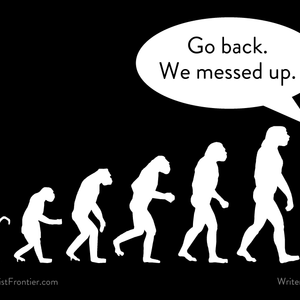
Visual Representation of 2020

As it stands today, our feckless government has spent £284bn – or £283,915,000,000 to be exact on ‘the war against Covid19’ and the bill is set to rise even further with at least £55bn more for public services alone earmarked for 2021-22.

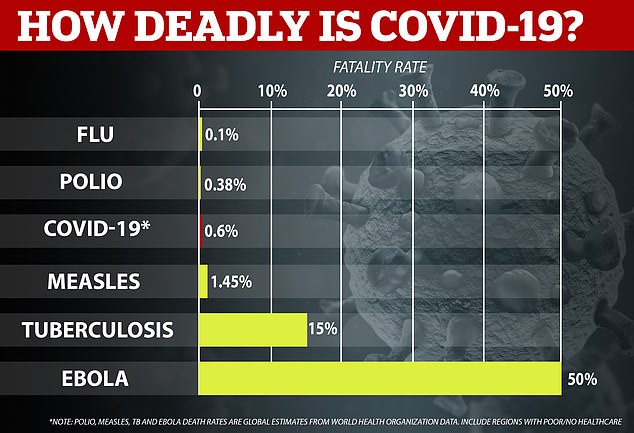
All for a virus with a 0.6% fatality rate and an average age at death of 82.

To pay for this, the Office for Budget Responsibility (OBR) has estimated that borrowing will rise to £394bn this year, the highest level since the Second World War and it is you and your cohort that will be paying it off for the rest of your lives.

It will then become the responsibility of your children, should you decide to bring any into this shitstorm of a world – economic reasoning and past evidence suggest that the whole ‘Rona crisis will lead people to have fewer children.

The decline in births could be on the order of 300,000 to 500,000 fewer births next year.

A decent amount of the spending went on scaring the public enough for them to be complicit – pumping out fear inducing figures and daily death tolls whilst quietly taking away our freedom, all under the guise of keeping us safe.

We were told that, in order to keep our elderly safe from the virus, we could no longer visit them – the sweeping decline in their mental wellbeing was almost as swift as the devastating infection rate that followed.

It wasn’t us that were to blame for this catastrophe – while the government ensured that relatives couldn’t visit their loved ones by enshrining it in dodgy covid legislation, they did fuck all about the agency workers moving between care homes without sufficient PPE and therefore spreading any possible virus far and wide as well as the dozens of elderly residents sent back to full care homes regardless of testing positive.

While we were distracted with the endless ‘Rona rhetoric and mandatory clapping the economy collapsed around us.

Unemployment, poverty, homelessness and suicide rates went up as human interaction decreased. We were thrust into a lockdown straight from the pages of a dystopian novel and once there we struggled to get out.

A three-week lockdown to ‘flatten the curve’ became a three-and-a-half month purgatory that served only to flatten the economy, our mental wellbeing and our freedom.

We have just come out of another 27 days of ‘additional lockdown’ – straight into some ‘Tier 3’ bullshit that affords us no more freedom than we had in lockdown except being allowed to spend money in ‘non-essential’ shops on presents we may or may not be allowed to visit at Christmas.

Boris told us that if we are very, very good and follow all the rules of his ‘pre-Christmas circuit breaker’ (that will no doubt last until Easter) then we may be allowed to see a few relatives – as long as we don’t hug or play board games, do leave windows open or eat in the garden and don’t even think about sharing a cracker with nan.

And here we are today, November 29th 2020, the whole year has been one political car crash after another and I have no idea where we are heading, only that it is going to be a bumpy ride.

I do know that, as a society, we are more divided than ever and if I had just one wish for the future it would be that your generation unites. You need to pull together in order to make a difference – together you are so much stronger and it’s the only way change can happen.

All of you will have been impacted in some way by the Covid19 but few of you will have been ill.

It doesn’t matter if you have never had it, or if you don’t know a single person that has – the knock on effect and the way the government have (mis)handled the situation means that you are likely to face some very difficult years ahead and I really am truly sorry that there wasn’t enough of my generation to take a stand before it was too late.

But, there is hope…

You and your peers have the necessary skills that will guide you through the tough times and hopefully out the other side to a better, fairer and all together brighter future.

You’re the critical thinkers, questioners and inquisitive souls – the ones who can reimagine society and, if you pull together, create a place where everyone is respected, treated fairly and equality is a given.

When you’re old enough to have a vote remember what this government have done and cast it accordingly.

Seek knowledge and not just from the ‘news’. Challenge your own views and share what you learn with others.

Be sensible but don’t be a pushover – this includes nonsensical rules that feel wrong in your soul.

Dance. Laugh. Socialise. Live. Love. Touch. Feel. Kiss. Smile.

Stay Human.

Be Kind.

Take care of yourselves and others

Yours Sincerely,

A Concerned Mum

XXX

Go Back Home

The man you told to go back home

Has been here longer than me

He came here in the seventies

From his own war-torn country


The fact you can’t see your own doctor

Or get on the housing list

Has nothing to do with immigration

And everything to do with a government that take the piss


From Cameron to Bojo, with a dancing queen in-between

None of them give a shit, it’s very clear to see


Our young are sad, feeling lost

Mental health services cut due to cost

National Health is on its knees

They’re selling it off, Boris and his cronies


Working long hours with nothing to show

Families on Tax Credits, wages so low

Regular folk are struggling to survive

Yet the 1% continue to thrive


So don’t tell me that Boris is the man for the job

We can all see, he is clearly a knob

Take a minute and think about what you see

They’re not out to steal your job or your TV


The truth won’t be found in the paper or news

Fact is that as a country we have so much to lose

The diversity that makes the UK what it is today

Is the very reason I voted to stay

Brexit text with United Kingdom and European Union flags


Is JoJo ban justified?

Latest tween fashion statement divides opinion in the playground. 

unknown-1

Following faddy trends and sporting the latest fashion have become part of every day life for many school age children both here and in America.

Gone are the days of swapping marbles or trading conkers, today’s children are far more interested in gadgets or discussing the latest YouTube stars.

One popular YouTube star is JoJo Siwa, a 13-year-old girl famous for starring in US reality show Dance Mom and creating the now infamous JoJo Bow.

Large, brightly coloured hair clips with an oversized bow attached, JoJo Bows are used by girls to decorate a ponytail and, although something similar but slightly smaller was popular in the 1980s, they are taking the country by storm.

unknown-2

JoJo Bow of the 80’s – aka The Fergie Bow

This may have something to do with the fact that JoJo, who also sings, has her own YouTube channel and a huge online presence – her videos have had over 2 million views and she has 4.5 million followers on Instagram so, even if you’ve never heard of her, chances are your child has.

Recently releasing a video explaining why she likes to wear giant bows, JoJo has inspired thousands of young girls to follow in her footsteps, even releasing her own range available for them to choose from at a high street retailer.

So, why is this news? Apparently the giant hair accessory is giving teachers a huge headache and some schools have made the decision to ban them completely, leading to one angry parent accusing teachers of treating the bows “like guns.”

The headteacher of one of the schools to ban the bow has justified the decision, saying that they don’t fit in with the school uniform ethos which is enforced to signal to the children that they are part of the school family and there to work, not be distracted by huge accessories worn by their classmates.

images

JoJo Siwa

School uniform has been subject to debate several times over the years – Michael Gove has previously urged all schools to introduce not just a standard uniform, but blazers and ties too. Then there was the time Ed Balls suggested that local authorities encourage schools to adopt ‘smart’ uniforms and strengthen ties with ‘uniformed’ organisations such as scouts and guides.

Not everyone agrees and one man who has spent eight years studying school related statistics is American academic, David Brunsma, a sociology professor at Missouri-Colombia University. After embarking on the lengthy research he concluded that uniforms do not make schools better and the enforced wearing of one is actually an issue of children’s rights, social control and one related to increasing racial, class and gender inequalities in schools.

See this article about a school in Derbyshire that produces fantastic results, is deemed good by OFSTED and doesn’t enforce a uniform at all.

What do you think – are schools right to ban the accessory or are they making a mountain out of a hair bow?

Can everyone just stop taking selfies now please….

Heres a little selfie...

Heres a little selfie…

According to the Urban Dictionary (yes, there is such a thing), a selfie is: ‘A picture taken of yourself that is planned to be uploaded to Facebook, Myspace or any other sort of social networking website.’

An alternative description could be: “Self-absorbed, totally unnecessary and often poorly focused snapshot taken with the primary intention of posting on social network sites, for no particular reason at all.”

The BBC has recently released an article, looking at the science behind selfies, explaining that ‘people generally have an image of themselves that tends to be younger and more attractive than we really are. This has led to an obsession with selfies, for the first time ever we are able to take and retake pictures of ourselves until we can produce an image that comes closer to matching our perception of what we think we look like.’

Ok. So let’s just think about that for a second.

Just because you are able to do something, it does not mean that you really should. Selfies are the perfect example of this. I suppose it does show a certain amount of confidence, and possibly a little narcissism, to post self-portraits on the Internet, knowing that others are able to comment on them. However, if they are being Photoshopped to death and then shared in the vain hope of gaining ‘likes’ then I think you may have a deeper issue that needs addressing…

The perfect Photoshop selfie?

I have spent many an evening ‘untagging’ myself from pictures I would rather never saw the light of day, let alone want anyone to comment on. *Is it untagging or detagging – has anyone officially decided on what we are calling this yet?

Don’t get me wrong, I’m not totally against the odd self-portrait; I even took one once, of me and my Grandma on her 90th birthday. The result was an unflattering, blurred picture of me looking ten years older than my actual age, highlighting every blemish, pimple and stray hair, and my Grandma looking terrified, staring into camera like a rabbit in proverbial headlights.

There are just so many of them that it’s driven me to a severe state of SOS….(Sick Of Selfies). Just once I want to be able to log onto Facebook without being bombarded with countless selfies, from, ‘I am wearing bikini in winter and then taking pics in the mirror for no reason’ to the more common and disturbing, ‘look at me pulling a duck face at various locations throughout the day’…..yes, you know who you are.

I’m not alone in my despair of this alleged nit-spreading, self-loving obsession sweeping the country. Selfies made an appearance in The Independent’s list of ’50 things we hate about modern life’ – coming in at an unsurprising number six, not quite as annoying as self service check outs but considerably more disliked than the entity known as Gangnam Style (which, for the record, came in at number 22).

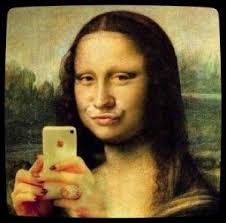
Mona Lisa Selfie...

Mona Lisa Selfie…


Every man and his dog has access to some kind of device these days, and the capacity to take pictures of some amazing things and sharing them with the world online within seconds. Sadly, looking at some of the selfies floating around it would appear that, for some people, the dog would actually be able to take a better picture than they clearly can.


Who was it that decided to, rather than focusing the camera on the wonders of nature or the joy of capturing a special moment, it would be a much better idea to take a picture of yourself looking ridiculous – and then share it all over the internet like some kind of crazed cyber-egotist?

The number of selfies popping up is mind-blowing; over 17 million selfies are uploaded to social media every week and it’s not just the teenagers who are adding to these figures either.

It would be nice to blame the youth for such nonsense, writing it off as a faddy craze but, while they may have started it, they are certainly not the only ones keeping this strange new tradition alive and growing at epidemic proportions.

The first ever selfie was taken in 1914, by the then thirteen-year-old, Russian Duchess, Anastasia Romanov. I’m sure she had no idea just what she had started that day as she stood on a chair and took a picture of herself using a Brownie box camera. Anastasia later sent it to a friend saying: “I took this picture of myself looking at the mirror. It was very hard and my hands were trembling.”

Grand Duchess Anastasia Nikolaevna

Grand Duchess Anastasia 

These days the over-55s are taking more selfies than the 18 to 24-year-olds, with one in six admitting to regularly taking one. My own great-aunt Enid is one of these OSOs (Older Selfie Offenders), she’s been known to post the same selfie over a dozen times within a minute. It seems that while she struggles with the concept of press and wait while uploading, she is, however, a dab hand at the ‘art of selfie’- often striking her own version of the duck face pose. Bless her puckered lips…

Turns out there are even a number of websites and Youtube videos offering tips on how to achieve the ‘perfect selfie’, while over on Twitter, ‘self-confessed-selfie-fan’ Kim Kardashian regularly tweets advice to her millions of followers, before getting distracted by her own reflection…

Seems that the selfie is here to stay and, love it or hate it there isn’t much us selfie-phobes can do about it – other than ignore them and hope they go away…

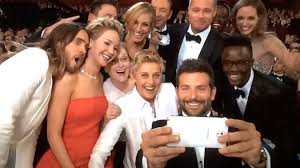
Possibly the most famous selfie ever?

Possibly the most famous selfie ever?

Several of my friends, who shall remain anonymous, are serial selfie-offenders and it drives me crazy. One in particular has even been known to post the same picture several times using different filters. I kid you not…

I will leave you with quite possibly one of the most annoying songs ever released, I predict this appearing in next years list of major irritations…..

Strangeways…The inside story

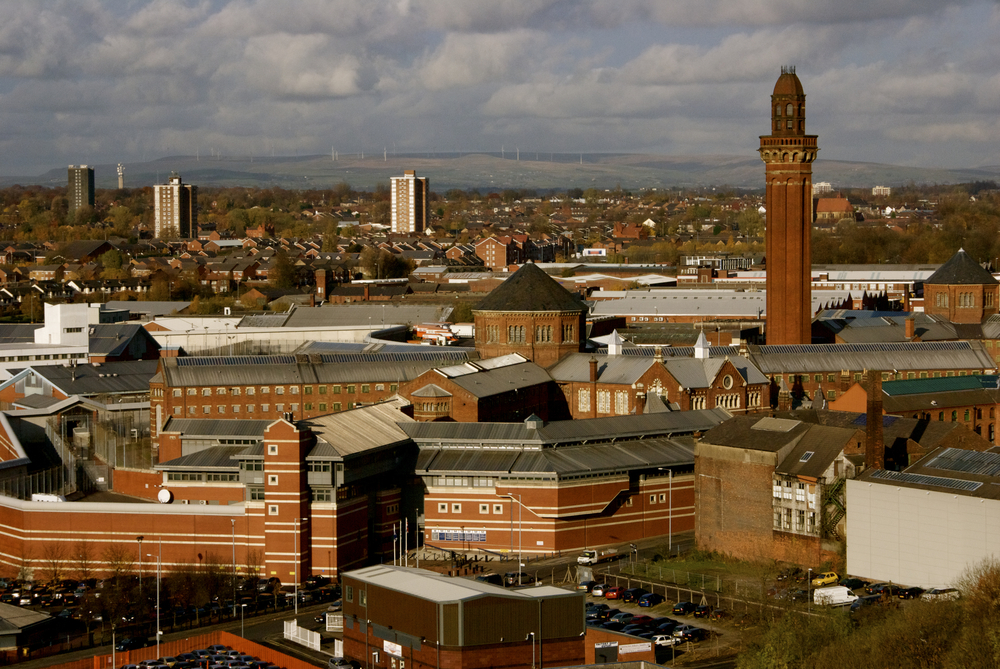
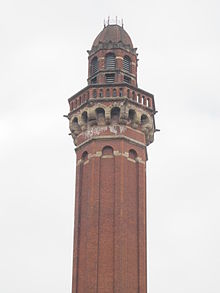
JUST outside Manchester city centre, not far from the hustle and bustle of shoppers and office workers, there is a landmark that is known by many, recognized by others and and feared by some.

Strangeways  via Shutterstock

Strangeways 

Today, Her Majesty’s Prison Manchester, previously known as Strangeways, is an intimidating, somewhat overbearing construction overlooking the busy trading area of Cheetham Hill Road where warehouses can be found down every side street.

As a category A prison, HMP Manchester houses more than 1,000 of the country’s most dangerous and depraved individuals, some of whom are guilty of murder, rape and supply of Class A drugs.

Opened in 1868, at a cost of £170,000, Strangeways was originally designed in an overtly

Alfred Waterhouse via Wiki commons

Alfred Waterhouse 

gothic way, as chosen by the winner of a competition at the time for the best design – a man called Alfred Waterhouse.

Manchester had been named as an assize town since 1864, meaning that the city could try serious cases and had the right to execute anyone convicted of murder.

These, public executions, were held outside the walls of New Bailey Gaol, but, having been built in the eighteenth century, it had fallen into disrepair and needed rebuilding.

In 1863, five years before public executions were abolished, a group of Lancashire magistracy met in the Mayor’s parlour at Manchester Town Hall and called for a new county gaol, where executions would be held in private. They proposed that hangings should take place within the walls of the gaol, and that the only witnesses should be the High Sheriff, the governor, a special jury and representatives from the press.

These suggestions met with government approval and bear many similarities to the procedures that were eventually adopted, once private executions were introduced, and permission was given for the new gaol to be built. Some of the original stones from New Bailey were used in the construction of the new one too.

Strangeways, built on Southall Street, was effectively two gaols in one, holding 800 men and the same number of women, with steps in place to ensure that they never came into contact with each other. Notably this included a screen that was pulled across splitting the chapel in half so that even during prayer there would be no opportunity to meet with the opposite sex.

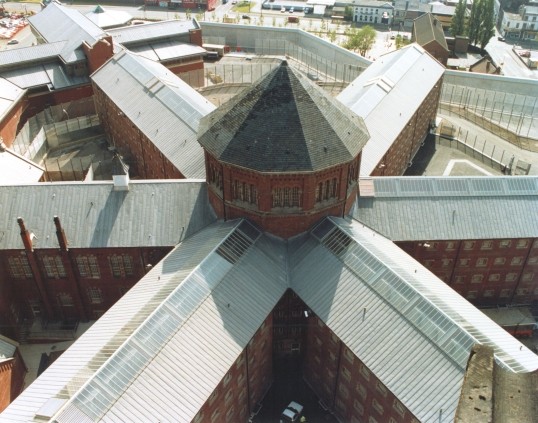
Panoptic design of Manchester Prison via Wiki Commons

Panoptic design of Manchester Prison

Built using the Panoptic principle, Strangeways can be best seen from above where the breathtaking view of all six wings radiating like spokes on a bicycle from the all-seeing central viewpoint can be found.

This was in the days before the all-seeing eye we know as CCTV came into being, the prison officers of old relied heavily on the circular design, patrolling the central area regularly in a bid to deter escapees.

Each wing has four floors split into blocks, with over thirty cells on each, as well as a shower block, recreation area and laundry room for the inmates to use. The cells were originally made for single prisoners but, in more recent years, they have been adapted to house two inmates, often causing overcrowding and other related problems.

Each cell measures just 13-foot in length, 7-foot wide and 9-foot high – when the prison was first opened they were equipped with a simple wooden bed that could be used as a table during the day. These days while the size hasn’t changed the bed has, to be replaced with a metal bunk bed and a separate table and chair, although it is somewhat cramped, especially for two grown men.

Originally some of the cells were fitted out as workshops, so inmates could fill their time weaving matting and making shoes. There was also a treadmill that could be used by eighty men at one time, this was for prisoners sentenced to hard labour; it pumped all of the water used within the gaol from a deep well.

The tall, minaret-like shaft within Strangeways is a prominent feature of the Manchester skyline and

Strangeways Tower via Wiki Commons

Strangeways Tower

originally it operated as both a smoke stack and a ventilation shaft. It hasn’t been in use for years but is still a major feature of the prison nonetheless.

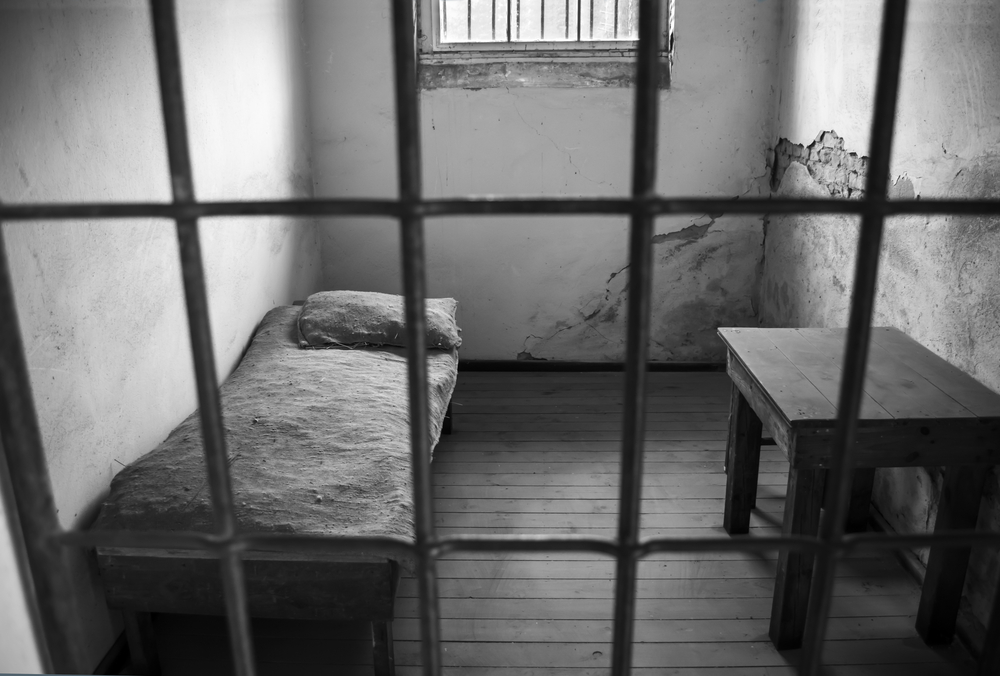
The basement was reserved for the ‘refractory cells’; it was to these that the governor sent prisoners who would not work or who broke prison rules. It was also where the condemned cell was located.

Formed by two ordinary cells being opened up into one large cell, in the basement of B wing, the condemned cell is still there today – although the original use has long since been abandoned.

There were two metal doors, one leading to a long corridor, the other to the visiting area. It was there that family and friends met with the condemned prisoner, although they were allowed no physical contact and were separated by thick iron bars.

To reach their place of execution, the condemned prisoner was led out of the door and across the corridor, before passing through double doors, which opened into the execution shed.

Noose via Shutterstock

The shed was 15 feet square and housed the scaffolding, which was folded away until needed. A pair of doors were opened that in turn opened up the structure, which was then ready for immediate use.

No doubt it was of little comfort to the person about to be hanged that this contraption meant the expense and inconvenience of having to erect a scaffold outside of the gaol each time there was an execution were avoided.

The first person to be hanged at Strangeways was a 19-year-old man called Michael Johnson, who, after stabbing a man in the leg during a pub brawl was condemned to death in 1869 while the last and one hundredth to meet their end on its gallows was a woman, Gwynne Owen Evans, in 1964.

Hanging shed via Wiki Commons

Hanging shed 


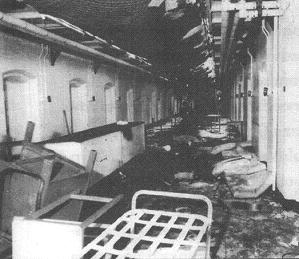
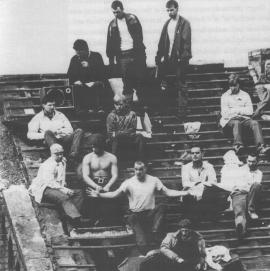
Strangeways has witnessed many changes since this time, not least the outlawing of executions, however, one of the biggest structural changes took place after the riot of 1990.

Labeled the worst prison riot this country has witnessed, severe damage

Fire damage in B Wing via Wiki Commons

Fire damage in B Wing 

was caused to the building during a twenty-five day period that saw prisoners climb onto the rooftop and set fire to their cells in a protest against conditions within the jail.

Many of the inmates began to feel as if their rights were being ignored. Some were confined to their cell for up to 22 hours a day, with only limited time given for exercise and bathing.

On the roof during the riot via Wiki Commons

On the roof during the riot 


There were a series of small protests before the riot, which began when, during a sermon at the prison chapel, over 300 inmates rebelled against the guards with the conflict quickly spreading through the prison.


When it was brought to an end, and the last of the prisoners had surrendered, extensive renovations were necessary before it could re-open. When it did accept new inmates, the government gave it the new official title of HM Prison Manchester.

In abandoning the old name, it was hoped that the prison’s image would be improved. To many Mancunians however, it will always be known as Strangeways, or ‘The ‘Ways’, as *Jimmy puts it.

Spending eight weeks in the prison earlier this year, while on remand for shoplifting, *Jimmy explains how little has really changed for prisoners on the inside, despite the external makeover.

He arrived at Strangeways after his appearance in court and was placed on the induction wing before being designated a cell on G Wing.

“The walls closed in around me. I couldn’t breathe. Sitting in the corner    of the bland yet sour-smelling box that was my new home I felt physically  sick.”

He goes on to describe the feeling of isolation as he spent time in his cell, what he calls ‘the box’.

"The cell was like a box"

“The cell was like a box”

“The first thing to hit you as you enter the ‘Ways is the stench. The rancid mixture of sweat and damp clothes, despair and sadness. Emotions have a smell of their own too; you just don’t notice it on the outside.

Next is the noise. Not usual, everyday sounds – these are sinister and get louder at night; the screws walking on the landing, keys jangling from their waists, the sound of metal slamming shut and the creak of a lock being opened. These are the noises that make Stangeways, the ones I still hear at night, even though I’m in my own bed far away.”

Although the condemned cell of old is no longer used, the basement is – as a segregation unit for prisoners who refuse to follow the rules. Jimmy spent a week here after getting into a fight with a fellow inmate. The walk from his cell down to the unit is one he will never forget, and one that he says brought him close to those that had been before him:

“I knew we were headed down to the segregation cells when the screws came to get me but I really wasn’t prepared for what it is really like down there.

“As we walked down the stairs I could feel the air get colder, that’s when it hit me we were actually underground. The feeling of isolation was crushing, it felt like with every step I was becoming more invisible, what if they forgot about me and just left me here – who would care, who would look for me?

"it was cold and hkjhk" image via shutter stock

“What if they forgot about me?” 

“The cells down there are freezing, and quiet. The only discernable noise I heard was the occasional sound of a radio somewhere close by. Not clear enough to make out a tune, just enough to make me feel that there was other humans out there, that I hadn’t been left to rot underground after all.”


He describes his time in the segregation unit as the lowest in his life, where the feeling of being invisible and disposable was never far away, he said:

“I think it is because you are underground, and the fact that people have been there before you but never left. The gallows and hanging tackle may be long gone but we know it was there and what happened – loads of poor blokes went down those same stairs as me but, instead of coming out the other side, they were killed, in a shed like one you would keep cows in. That is the real crime in my eyes, the stuff that isn’t talked about anymore.”

“For me the problem with Strangeways is, and always has been, the mentality of the people running in, the one’s in charge. Until that changes, and until they see prisoners as people, not cattle, they are never far away from another situation like the one in the nineties’. Doesn’t matter how nice they make the outside look when the inside is rotten to the very core, kind of like trying to polish a turd if you ask me.”

While the name may be up for debate, one thing that is certain in regards to HMP Manchester, or Strangeways, is that it will continue to be one of Manchester’s most infamous landmarks for many years to come. Whether it is a much needed necessity or an outdated and inhumane relic of the past is a matter of opinion.

Here is a Youtube video called The Photograph which depicts some of the scenes during the riot and the reasons behind it…

A night with Nikki…

Smart, funny and exceptionally witty, Nikki looks much younger than her 35 years. She dreamt of being a singer and enjoys writing poetry. Born in Brazil, she settled in Manchester as a young girl when her parents came in search of the promised ‘better life’ they had heard so much about.

She is also an escort and spends her evenings having sex with men for cash.

nikki


Far from the preconceived ‘victim’ or ‘down on her luck’ addict that springs to mind, Nikki is the epitome of class and sophistication. Long, lustrous hair swept back off her face and smooth, clear skin, she has a figure that makes women envious while bringing grown men to their knees. It’s hard to ignore the lustful glances she’s attracting as we chat over a glass of wine in a busy Manchester bar.

With so much in the news recently about the rise of girls forced into prostitution, Nikki is eager to lift the lid on the other side of this often-misunderstood profession – where, for some, selling sex is a choice and not a necessity.

“I sell sex because the money is good, the hours are flexible and to be honest, I’m really good at it. I made the choice to become an escort and I’ve never really looked back, finally I can support myself and have a pretty decent standard of living at the same time.”

Married for a number of years, Nikki says she was ‘happy with her lot’ and looking forward to possibly having children one day, until her husband had an affair, eventually leaving her for a much younger woman he had allegedly met at work.

“It knocked my confidence hard when he left because I never saw it coming. He just went to work one day and never came home.”

“I was enrolled on a book keeping course at college and wanted to become an accountant but, after he left, I just couldn’t find work and things began to fall apart. That’s when I made the decision to do what I know best. Sex was never an issue when I was married, in fact the thought of being paid for my time felt rather empowering.”

Nikki says it was incredibly easy to get into escorting, after finding an advert in the local paper; she called an agency, spoke to the madam and was invited to the ‘office’ for an interview the same day.

images-4

“I was really nervous and didn’t have a clue what to wear so I went for what was, in my opinion, sexy and appropriate – an incredibly short skirt and staggeringly high heels. Arriving by taxi at the discreet address on a leafy lane in Cheshire, I quickly realised that I had got it very wrong and Pretty Woman was not actually a fair representation of my new chosen career.”

The office turned out to be a smart apartment in Hale, one of many in a private, residential block. Here Nikki met *Sue, the lady in charge and was told the ‘rates and rules’.

“Don’t dress like a hooker, don’t do anything unprotected, do not try and undercut the other girls and never give out your personal phone number.”

Nikki certainly doesn’t fit the stereotypical image you would imagine for a ‘hooker’- dressed in a blouse, fitted jeans and designer jacket she would look more at home in a boardroom than on any street corner. As she says herself,

“Most of the time you would never know I was an escort. Remember I am a normal woman too. I sit next to you on the bus, I work out next to you at the gym and I pay for my milk next to you in the supermarket.”

This raises the issue of what other people think of her career; Nikki admits that she can’t always be honest with those around her.

“I only have a handful of friends that know what I really do, my family and everyone else believes that I am a very successful accountant, they probably wouldn’t believe it anyway.”

“It can get awkward, one time my friend brought her books round to me in floods of tears, asking me to help her make sense of it all. I spent a whole morning ringing accountants, eventually paying £200 to one willing to do the work quickly so I could say I had done it for her.”

Asked if there are any plus points of her job, Nikki’s eyes sparkle as she describes a world far different from any most women could imagine.

“The gifts are brilliant, I have regular clients who spoil me all the time, I’ve had perfume, clothes, jewelry and even a couple of exotic holidays over the years.”


nikki-2

“Most men I meet are like puppies, eager to please and looking for some attention – it’s easy to make them feel special and in return they treat me well. One of my favourite clients was an infamous gangster. He is in jail now and the media have portrayed him as this tough thug. This is not the man I knew. He booked me loads of times and was very charming, if a little flashy. One evening he called the agency, booked me for the whole night and we arrived at his farm house in the countryside by private helicopter to enjoy partying into the early hours.”

When I ask about the sex aspect of the deal Nikki shrugs it off as a very small, occasionally enjoyable part of her unusual job.

“Sometimes the man is unattractive or not really my type but I just block it out, concentrate on my shopping list instead. Smelly ones are dealt with by offering to shower with them and to be honest, most of the guys are alright really.”

“It turns me on to know that this man is paying me for my time, for my body – I have a high sex drive so it suits me just fine. Besides, what woman could honestly say that she wouldn’t like to be wined and dined then showered with gifts? I know a few married women who have sex with their husband whenever they want a new dress, carpet or whatever. The only difference with me is that I’m honest from the offset, they get exactly what they pay for and there is no hidden, ulterior motive.”

“I see men from all walks of life, most are married and all have their own reasons for coming to me. If I had a pound for every time I heard that classic ‘my wife doesn’t understand me’ I could retire. It makes me laugh, and a little sad really. I can’t help wonder if it was my husband saying those same pathetic, empty words to another woman all those years ago, it seems that there are far more misunderstood guys out there than happily married ones.”

The cynicism lies heavy in the air and the conversation takes a darker turn as I ask about the other side of the coin, the bad punters, as she refers to them. Looking down towards her hands it feels like Nikki is almost reliving the experience as her voice drops and the light seems to all but disappear from her eyes.

She doesn’t know much about him at all; he didn’t make much conversation. One thing Nikki does know for sure is that she was totally unprepared for what happened that night.

“He lived in a posh apartment in Chester, there was a doorman and I gave him my real name by mistake when I arrived. He was one of my first clients and I wasn’t used to using my fake name yet.”

“The instructions from the agency had made it clear that the door would be unlocked and I was to let myself in, naively I never really thought anything of it. When I arrived there was music playing really loud, the bass thumped through my body as I walked in and closed the door behind me.”

“The bedroom was in front of me and, as I walked in, I could see an envelope next to the bed with my ‘name’ on it.  A small, thin Chinese man appeared behind me wearing a bathrobe. He spoke impeccable English as he told me to turn off the already dimmed lights.”

Pillow Light Room Bedroom Night Lamp Sleep


She pauses, seemingly playing the scene over again…

“It all went wrong from there really. He was really rough, pulling my hair, grabbing me and almost folding me in half, with my legs in the air. It hurt my hips so bad I had to stop myself wincing with pain. Then he wanted to change positions but I just couldn’t do it, I was in agony and feeling really scared by then. I told him I had to stop and he went ballistic, it was like he wanted to hurt me deliberately.”

I ask her why she didn’t just leave.

“I don’t know, I didn’t know what to do” she shrugs.

Leaving as soon as she could, Nikki broke down sobbing in the lift and called the agency to say she never wanted to see him again.

Since then he has been blacklisted from other agencies too, turns out she wasn’t the first woman he had done this to.

So, is this Nikki’s dream job?

“No, but I can think of worse ones” she says. “The men I see are generally good guys, it’s only now and then you get a bad one and you just have to deal with it. What other job could pay me so well for so little – I say who, I say when and I say how much, that makes me in control, doesn’t it?”

As Nikki finishes her drink and turns to leave I can’t help wonder if it really is her or actually the next punter who is in control after all.

sexy girl image

Halloween past n present…

Autumn’s here and it is my favourite time of year – I love crunching through the crispy leaves, collecting conkers with the boys and most of all, Halloween.

Just before the long winter evenings set in, Halloween is a welcome distraction from the chilly mornings and the imminent hustle n bustle of Christmas time.

fall-autumn-red-season.jpg

The celebration doesn’t have to cost much either – costumes can be cheap n cheerful and we’ve often had the most fun making our own at home. Having said that, I’m not the most artistic mum and most of my creations rely on a steady supply of bin bags, safety pins and a gallon of fake blood.

Every year, as we’re busy designing costumes and writing shopping lists involving newts eyes and plastic spiders, it always makes me think back to Halloween past, when my sister Lisa and I were kids.

As youngsters we never went without and were always well fed, clean and nicely turned out. Money was tight, as it was for many in the 80’s, but Halloween was something we always looked forward to as it was one of the many times of  year when we would get together with our cousins to celebrate in style.

We often combined Halloween with bonfire night and always took our pumpkin with us to my Aunts house, where we would have a party complete with fireworks and apple bobbing.

553025_606756512703450_312488604_n

I have very fond memories of watching my Uncle Kev race around the garden being chased by a Catherine Wheel that hadn’t been nailed to the fence properly while drinking sneaky snowballs with my cousin when the grown-ups weren’t looking. Apple bobbing was great fun, until I reached about 11 and realised that for years we had actually been dipping in and out of a big bowl of spit as ‘the little ones’ were allowed to go first. One year I bobbed for an apple and came out with a mouth full of dummy – true story.

Costumes were of the homemade variety, sometimes with a shop-bought mask added if Mum was feeling flush. I can still remember the hot and sweaty plastic on my face as I tried to see out of an eyehole more suited to Cyclops. One year I was a Mummy, rocking two whole rolls of toilet paper but my favourite by far was the year I was a punk.

Mum made me a bin bag dress complete with dog chain belt and big, hooped earrings. I felt so sophisticated that I considered adopting the look full time…..until Mum said a stern “No”.

I  love the smell of autumn, but on Halloween it’s especially special. Cold, crisp air mixed with the earthy smell of leaves and toffee apples. I do not, however like trick or treaters.

Let me explain; We were never allowed to go trick or treating, Mum always said it was dangerous to knock on strangers doors, whatever the date may be. As a youngster I thought this was the meanest thing ever and every year I would ask again, get the same answer and then sulk.

One year, when I was about 12-years-old I told Mum I was going to my friends for tea and we went trick or treating instead. It was one of the most exciting evenings of my life as we set off with a carrier bag each and a pocket full of eggs for anyone preferring a trick.

We collected loads of goodies from the neighbours and it was only as my bag filled that I realized I couldn’t take them home with me without mum finding out.

My friend and I sat in the local park and, with spooky masks now removed, we ate all the sweets we had collected. Staggering home feeling rather sick and shaky due to sugar rush, this was not the last time I would greet November with a tummy ache. I’m sure Mum knew exactly what we had been up to anyway, we didn’t have the sense to travel further afield, instead calling at the other houses on our street!

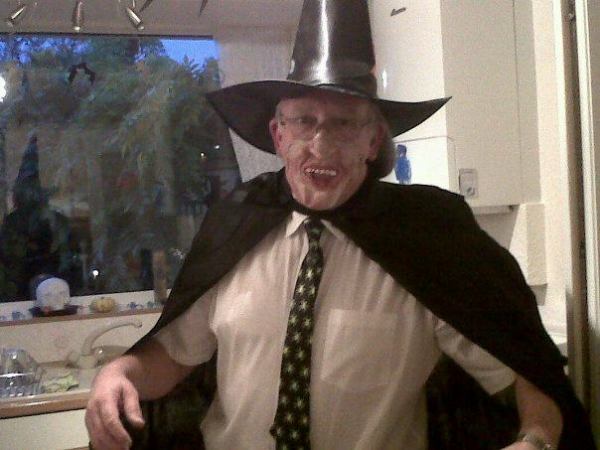
My children have inherited a love of all things spooky wooky and they’re looking forward to the Halloween my Mum and Dad throw every year.

For one night only their house is transformed into Spooky Towers – a place not for the weak hearted and where nothing is quite as it seems.

Both my parents are creative and put this to good use as they rig the house and put on a delicious spooky spread.


307844_259787467400358_462936519_n

Mum

Dad has even created a pulley system that he connects to a skeleton strategically sat in the corner of the room – as the kids walk by one of us tug the invisible thread and the said kid never fails to jump, scream and run crying in terror. Fantastic family fun if you ask me.

303089_259787910733647_1339146344_n

Dad


Talking of scaring the kids, Halloween is the perfect time to watch some spooky movies. Tim Burton is a firm favourite in our house, Jack Pumpkin Head is slightly chilling but more fun than scary. Personally I like Coraline – released in 2009 it tells the tale of an adventurous girl who finds another world that is a strangely idealized version of her frustrating home, but it has some very sinister secrets.

The reason I like it so much is because, although it is an animated children’s film, it is really dark and my 10-year-old son finds it really scary. Meany mummy.

So, Halloween is almost here and our preparations are well under way. We have a pumpkin fresh from my parents allotment and cant wait to get carving – I find it somewhat therapeutic, so much so that last year I carved faces in all sorts from grapes to butternut squash. The kids were totally spun out when I served them dinner surrounded by an array of spooky vegetables with faces staring at them.

 313049_259790404066731_2057323330_n

Well, I’m off to find some bat blood before the shops shut – What’s your thoughts on trick or treating? Tweet and let me know @taaliah76

This article featured in the autumn edition of Within magazine…

1380129_619015558144212_2035995918_n


Kent Wayne

Epic fantasy & military sci-fi author.

tonysbologna : Honest. Satirical. Observations

Funny Blogs With A Hint Of Personal Development

Wild Like the Flowers

Rhymes and Reasons for Every Season

Ummi Homeschools Me

Our journey through homeschooling...for the sake of our Beloved!

ultimatemindsettoday

A great WordPress.com site

Pencil Hub

For the Love of Stationery

unbolt me

the literary asylum

Thoughts, Tales, and Whatnot

the world as I see it through rose-tinted glasses

bookowly

bookowly

Captain’s Log

Life On A Different Plane

ashutosh buch

Random Stuff

Mo Ansar.com

The official website of Mohammed Ansar

Da Masked Avenger

Waiting to strike...

A Buick in the Land of Lexus

fresh hell trumps stale heaven

The Buttry Diary

Steve Buttry, Dearly Departed Husband, Father and Grandfather. Former Director of Student Media, LSU's Manship School of Mass Communication

twinswins

Life is two-riffic with twins!